
Should You Build a Deck or a Patio? How to Choose the Right Outdoor Living Space for Your Home
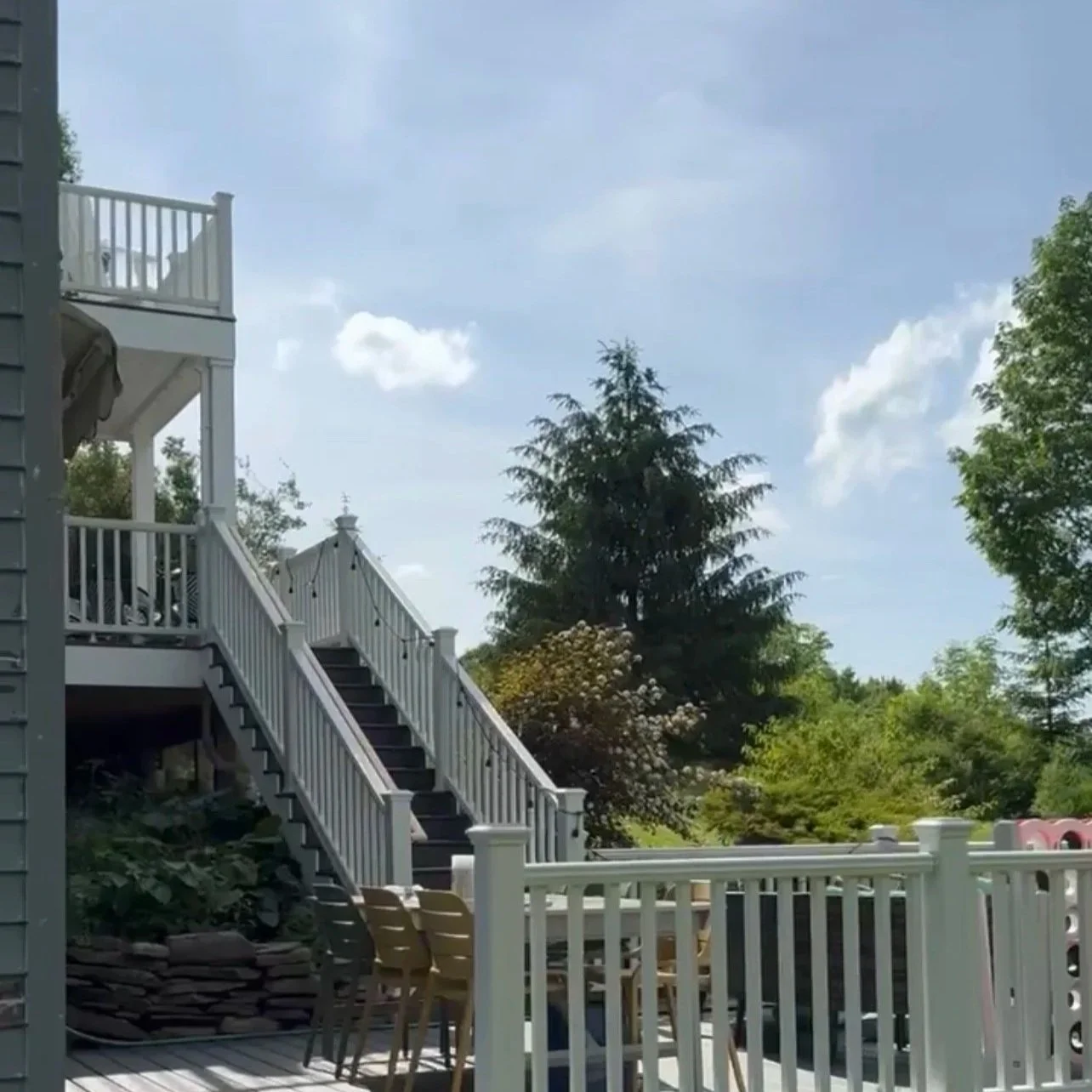
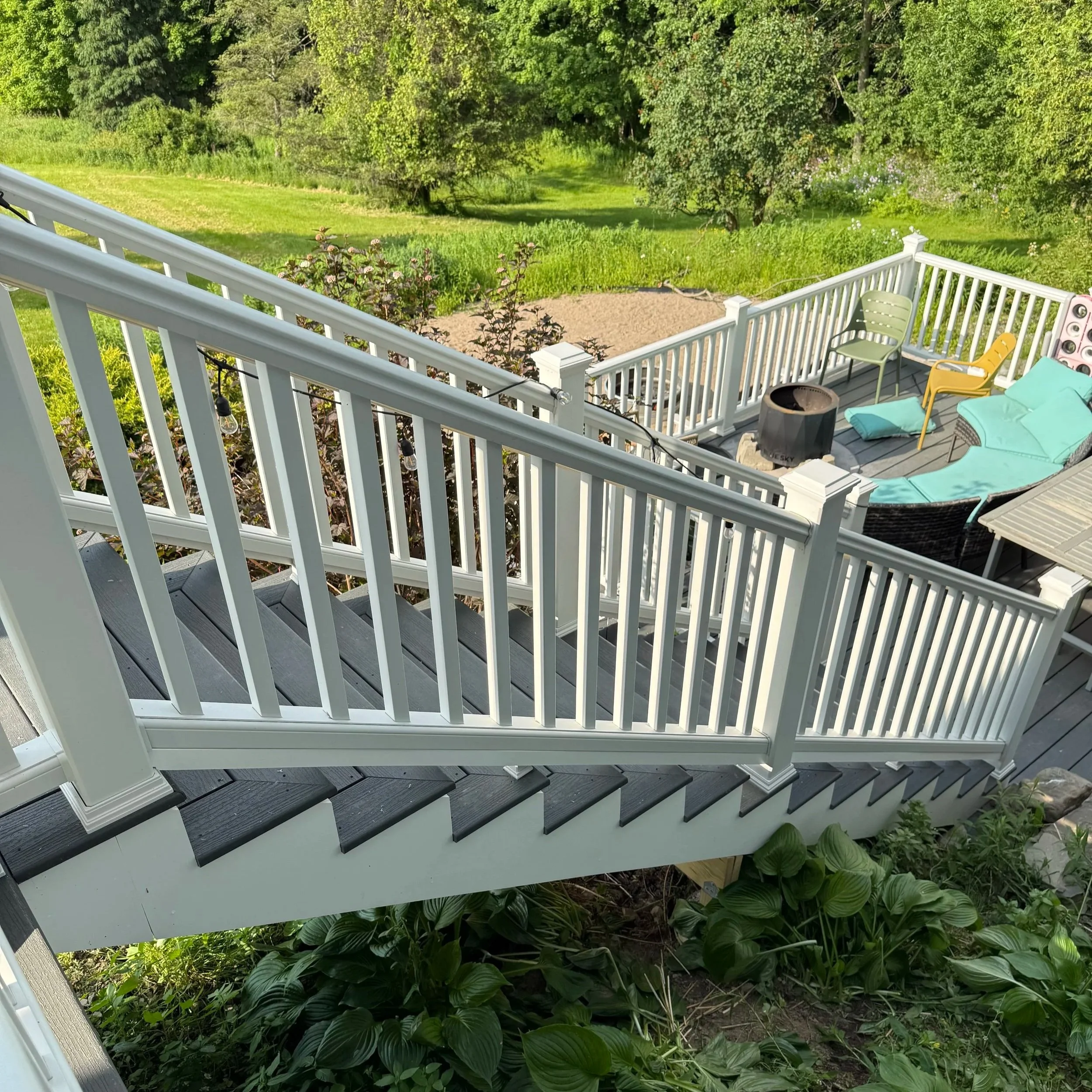
One of the most common questions we hear from homeowners is surprisingly simple: "Should we build a deck or a patio?" Sometimes it's framed a little differently — which adds more value, which is the better investment, which one lasts longer.
The honest answer is: it depends.
If you're hoping for a simple winner, you may be disappointed. After years of designing and building outdoor living spaces throughout Central New York, we've found that the best investment isn't always a deck — and it isn't always a patio either. The best investment is the one that fits your home, your property, and the way your family actually lives.
A beautifully designed bluestone patio can add far more enjoyment — and potentially more value — than a deck that doesn't suit the site. Likewise, a thoughtfully designed deck can completely transform how you use your home in places where a patio simply wouldn't work.
So rather than asking which one is better, we think the better question is: which outdoor living space is right for your home?
Start With How You Want to Use the Space
Before thinking about materials, permits, or budgets, think about your lifestyle. Outdoor spaces are meant to be lived in.
Ask yourself:
Where do you imagine drinking your morning coffee?
Do you love entertaining large groups?
Will your children spend afternoons playing outside?
Are you dreaming of an outdoor dining area?
Do you picture a fire pit surrounded by Adirondack chairs?
Will this become an extension of your kitchen?
The answers begin pointing toward the right solution. A deck immediately outside the kitchen, for example, often creates a seamless transition for grilling, dining, and entertaining. A patio may feel more connected to the landscape, naturally encouraging everyone to gather around a fire pit or garden.
Neither is inherently better. They're simply designed to support different experiences.
Let Your Property Help Make the Decision
Sometimes your yard makes the decision for you.
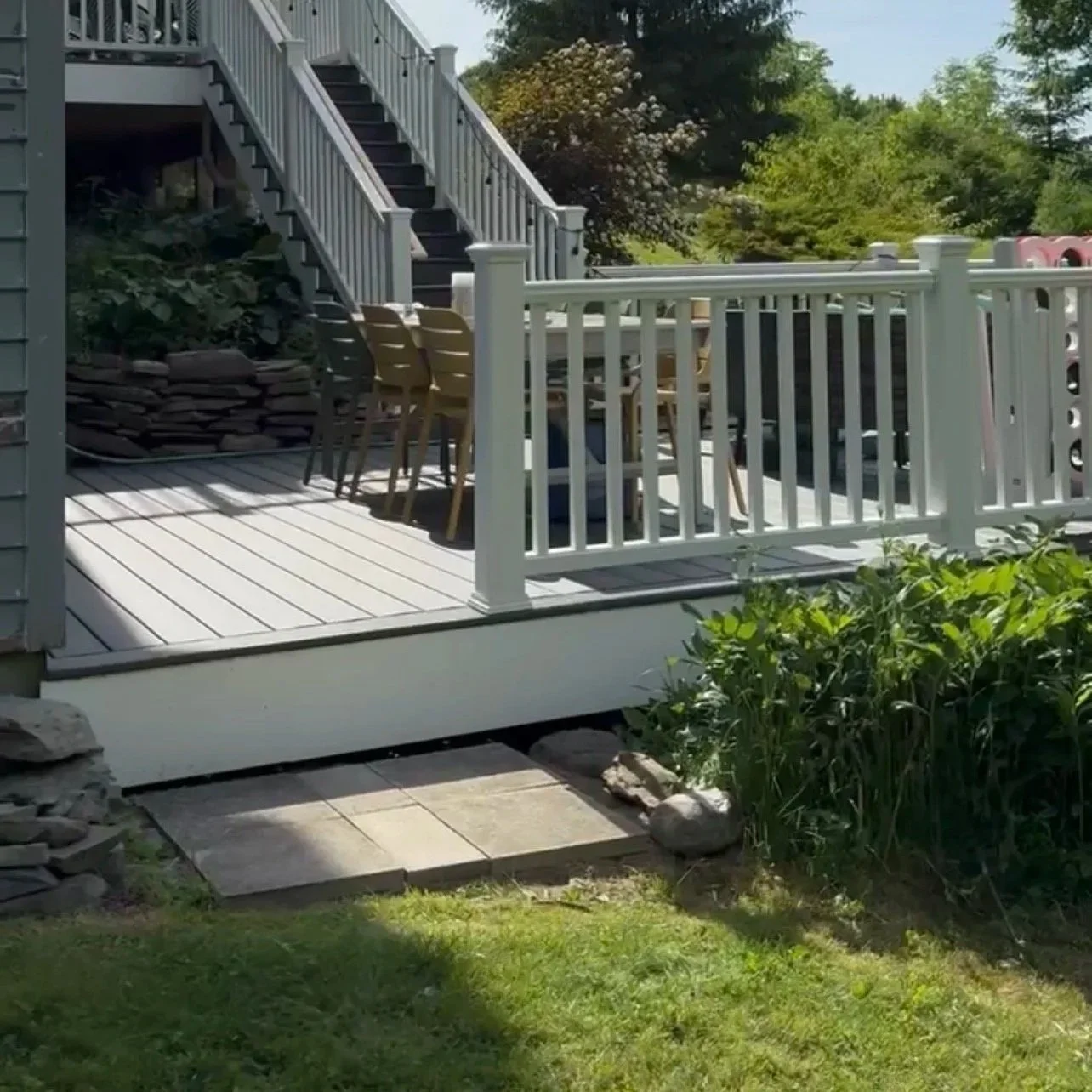
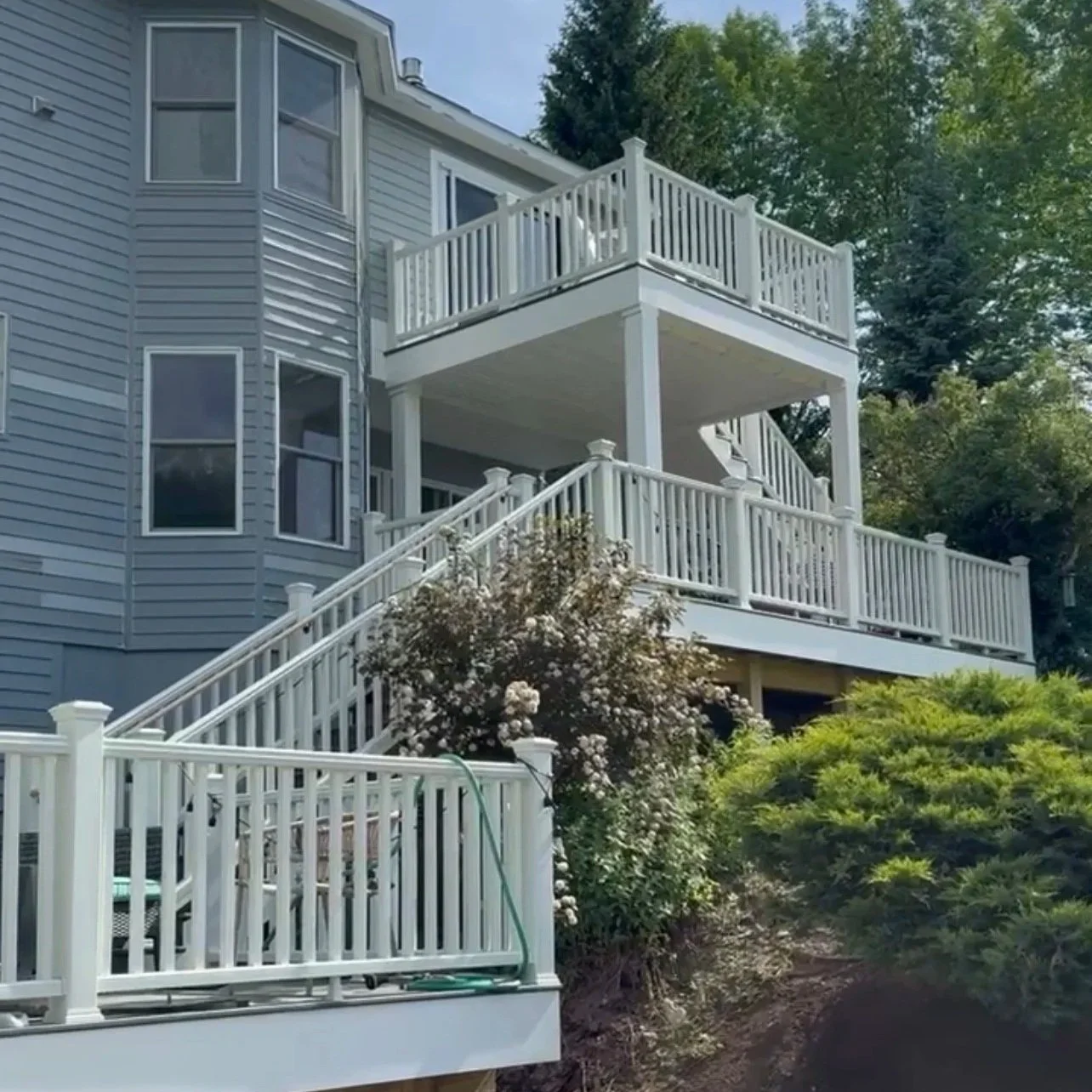
Homes with walkout basements, elevated first floors, or significant changes in grade often lend themselves naturally to decks. A deck can provide level outdoor living space while minimizing extensive excavation or retaining walls.
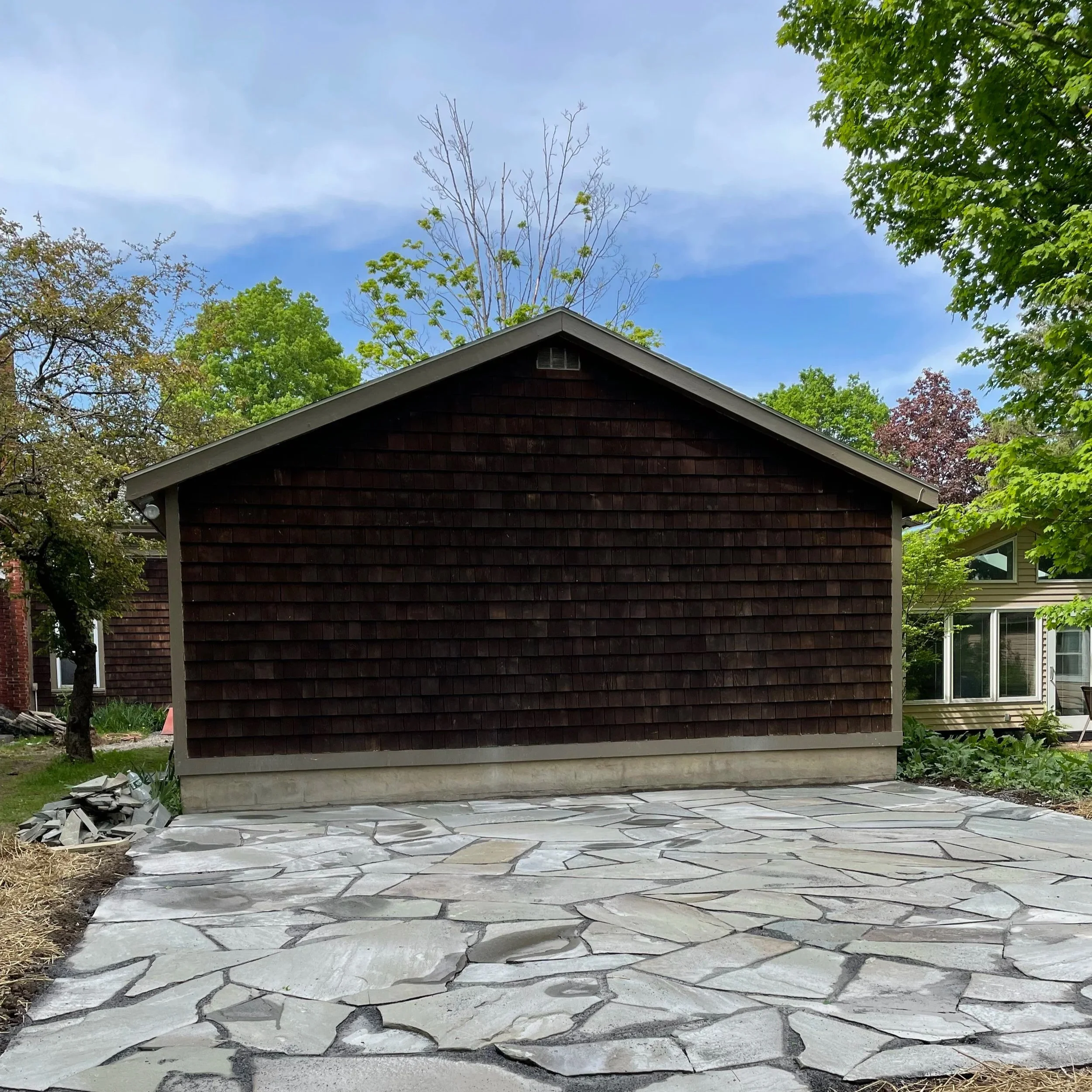
On flatter properties, patios often feel like a natural extension of the landscape. Thoughtfully designed stonework blends beautifully into gardens, lawns, and mature trees, creating an outdoor space that feels like it has always belonged there.
We've found that some of the most successful projects don't fight the property — they work with it.
Which Adds More Value?
Here's where things get interesting. Many homeowners assume one option automatically adds more resale value than the other. In reality, it isn't that simple.
Appraisers don't assign a fixed dollar amount simply because a home has a deck or a patio. Instead, they weigh the quality of construction, the condition, the functionality, the overall appeal, and how well the feature fits the property. A poorly designed deck won't necessarily outperform a thoughtfully designed patio — and an undersized patio may not deliver the functionality a well-designed deck offers.
In our experience, the outdoor living spaces that create the most value are the ones homeowners genuinely use. Because value isn't measured only at resale. It's measured in summer dinners with family, birthday parties, quiet mornings with coffee, and afternoons spent watching the kids play in the backyard.
The best outdoor space is the one that becomes part of everyday life.
Consider Your Home's Architecture
Some homes seem to naturally call for a deck. Others practically beg for stone.
Historic homes throughout Central New York often pair beautifully with natural bluestone patios that feel authentic to the property's character. Traditional colonials frequently work well with either solution, depending on the site. More contemporary homes may benefit from the clean lines of composite decking, while cottages and rustic homes often feel right at home with natural wood.
Outdoor spaces are most successful when they feel like they belong — not like they were added years later.
Maintenance Matters More Than Most People Expect
Neither decks nor patios are completely maintenance-free. They simply require different kinds of care.
Wood decks need periodic cleaning along with staining or sealing to preserve the wood. Composite and PVC decking eliminate much of that upkeep but still benefit from occasional washing to remove dirt, pollen, and organic debris. Stone patios don't require staining, but joints may occasionally need attention, weeds can appear if they aren't properly managed, and good drainage remains important for long-term performance.
So the question isn't "which requires no maintenance?" The better question is "what type of maintenance fits my lifestyle?"
Planning Considerations
This is one part of the project many homeowners don't think about until construction is ready to begin.
Decks are structural additions to your home. In many Central New York municipalities, they require building permits, inspections, and compliance with residential building code — and depending on the design and your local building department, engineered drawings or stamped plans may also be required.
Patios often have a simpler approval process, particularly when installed at grade. Even so, permits may still be required depending on grading, drainage, retaining walls, local zoning, or other site-specific conditions.
Every municipality is a little different. One advantage of working with an experienced contractor is having someone help navigate those requirements before construction begins.
Why We Love Bluestone Patios
We're admittedly a little biased. We've built some beautiful bluestone patios over the years, and they remain among our favorite outdoor projects.
Bluestone has a timeless quality that complements many of the historic homes throughout Central New York. It ages gracefully, rarely feels dated, and — when it's built correctly — can last for generations. A well-installed bluestone patio routinely lasts fifty years or more, and it isn't unusual to find stone terraces laid decades ago that still look entirely at home today. Individual stones can often be lifted and reset if repairs ever become necessary, depending on how the patio was installed.
That longevity is earned beneath the surface. In our climate, the difference between a patio that stays flat for decades and one that heaves and shifts is almost entirely in the base. Central New York's freeze-thaw cycles are relentless — water works into the ground, freezes, expands, and lifts anything above it that wasn't built to drain. A properly constructed patio starts with several inches of compacted, angular crushed stone, careful grading, and a deliberate slope that carries water away instead of trapping it underneath. Done well, the stone you see is only the finish. The performance lives in the groundwork below it.
When thoughtfully designed, a bluestone patio doesn't simply look beautiful on the day it's finished. It often looks just as appropriate decades later.
Sometimes the Best Answer Is Both
One of our favorite outdoor living spaces wasn't simply a deck. It wasn't simply a patio. It was both.
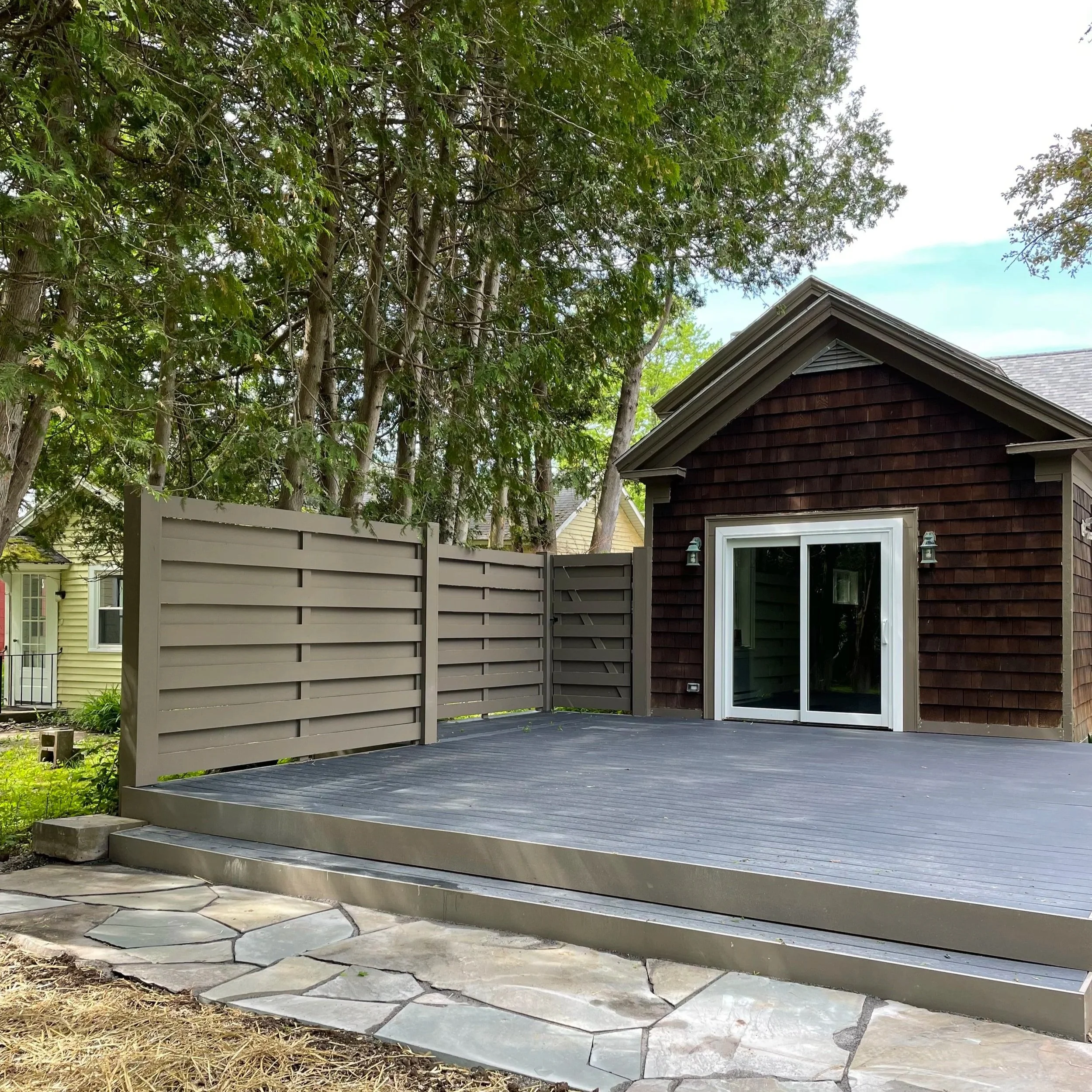
A deck created convenient access from the home. Wide stairs transitioned naturally into a bluestone patio, and the patio became the destination — a place for outdoor dining, gathering around a fire pit, and enjoying the landscape. Rather than choosing between the two, the homeowner gained the strengths of both.
Not every property calls for this approach. But when the site allows it, combining a deck and patio can create an outdoor living experience that's difficult to match.
So... Should You Build a Deck or a Patio?
If your property has significant changes in elevation, your living space sits above grade, or you're looking for direct access from your home, a deck may be the natural solution. If a deck is the right fit, choosing the material becomes its own decision — we walk through composite, PVC, pressure-treated, cedar, and hardwood in our companion guide, How to Choose the Right Deck Material.
If your yard is relatively flat, you enjoy being connected to the landscape, or you're envisioning a fire pit, gardens, or a timeless stone terrace, a patio may be exactly what you're looking for.
Neither is automatically the better investment. The best investment is the one that complements your home, supports the way your family lives, and is built with quality craftsmanship.
At C. Cooper Construction, we don't believe every homeowner should have a deck. We don't believe every homeowner should have a patio. We believe every homeowner deserves thoughtful guidance, honest recommendations, and an outdoor living space that feels like it truly belongs.
Sometimes that's a deck. Sometimes it's a patio. And sometimes the best answer is both.