
Often, yes. If the existing window frame is sound and square enough to accept an insert replacement window, the original interior casing can often stay right where it is. If the old frame needs to come out, it may still be possible to carefully remove and reinstall the casing. The answer can be different outside, where the trim and siding affect how the installer gets to the opening.
If there’s a piece you especially want to save, point it out during the site visit. “I want to keep this wide painted casing and the little ledge under the window” gives your contractor more to work with than “I want to keep the trim.”
Which part of the window do you want to keep?
The casing is the finished trim around the opening. The sash holds the glass and is the part you lift on a double-hung window. The frame surrounds and supports the sash. On many older wood windows, narrow strips called stops help hold the sash in place. Depending on the installation, those strips may need to come off even when the wider decorative casing stays.
The ledge you see inside is often called the stool. The exterior sill is at the bottom of the window outside. If you want to keep either one, ask about it separately. “We’re keeping the casing” can leave that part of the plan open.
Insert vs. full-frame window replacement
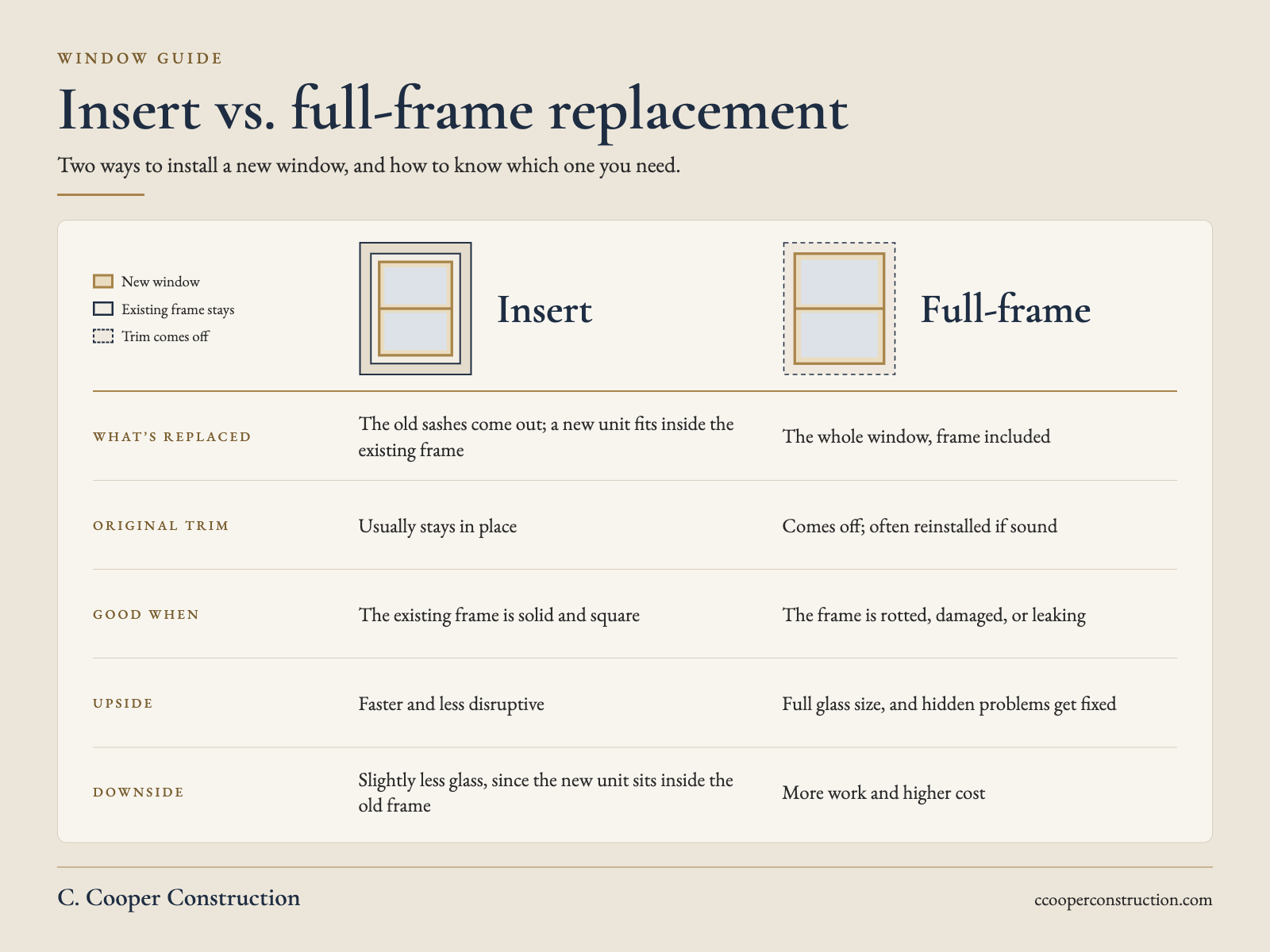
With an insert, the new window has its own frame that fits inside the old one. That can limit disruption to the surrounding finishes, but it can also leave you with less visible glass. On a narrow window, that difference may stand out. Before ordering, ask for the visible glass width and height of the proposed unit and compare them with what you have now.
With a full-frame replacement, taking the old frame out gives the installer access to the opening around it. That can be important when the existing frame is deteriorated or there are signs that water has been getting behind it. If you want the original casing reinstalled, ask what the contractor can tell from the site visit and what they’ll need to see once the work begins.
What could change the plan once work begins?
A soft exterior sill, staining near a lower corner, or a visibly bowed frame is worth a closer look before anyone orders a window. Paint can hide deterioration, and the condition of the wood behind the trim may only become clear once it’s exposed. If there are signs of a leak, ask how the contractor will investigate where the water is coming from as well as how they’ll address any damaged wood.
This is also where a clear quote helps. If concealed damage turns up, find out who will show you what they found, how the repair will be priced, and how you’ll approve it before the work goes ahead.
What if the original glass or sash is what you love?
Maybe it’s the slight waviness in the glass or the way the narrow wood bars divide the panes. An insert generally replaces the old sash, so those details can disappear even when the casing stays. If you’re mainly trying to address drafts or a window that’s difficult to open, have the original assessed. Depending on its condition, sash repairs, weatherstripping, or a well-fitted storm window may address the problem while keeping the parts you care about.
What to ask before you approve a window quote
Stand at the window with your contractor and ask, “Can you show me what will stay in place, what will come off and go back on, and what will be replaced?” Walk through it from inside and outside. Then check that the quote spells out:
The installation method for the windows being replaced.
The pieces you want to keep, including casing, the interior stool, or exterior trim.
The finish work included, such as patching nail holes, repairing trim, or touching up paint.
The plan for concealed damage, including how you’ll review any additional work.
If you’re planning a window replacement project in Utica, New Hartford, Clinton, Hamilton, or elsewhere in Central New York, we’d be glad to look at the opening with you. If there’s a detail you want to keep, show us that first. It’s often the most helpful place to start.