
If you’re replacing windows in an older home, you might want the new ones to look like they belong beside the original trim. You might also be ready to stop scraping and painting the exterior. A window with a painted wood interior and a clad exterior could give you both. But if you’re replacing several windows and are happy with a standard white finish, it’s worth seeing what a well-chosen vinyl window would look like in the same opening.
Before you compare quotes, decide what you want to see from inside the room and what you’re willing to maintain outside. Then look at the actual windows being proposed. Two windows made from the same material can have different finishes, frame profiles, and amounts of visible glass.
How the four materials compare
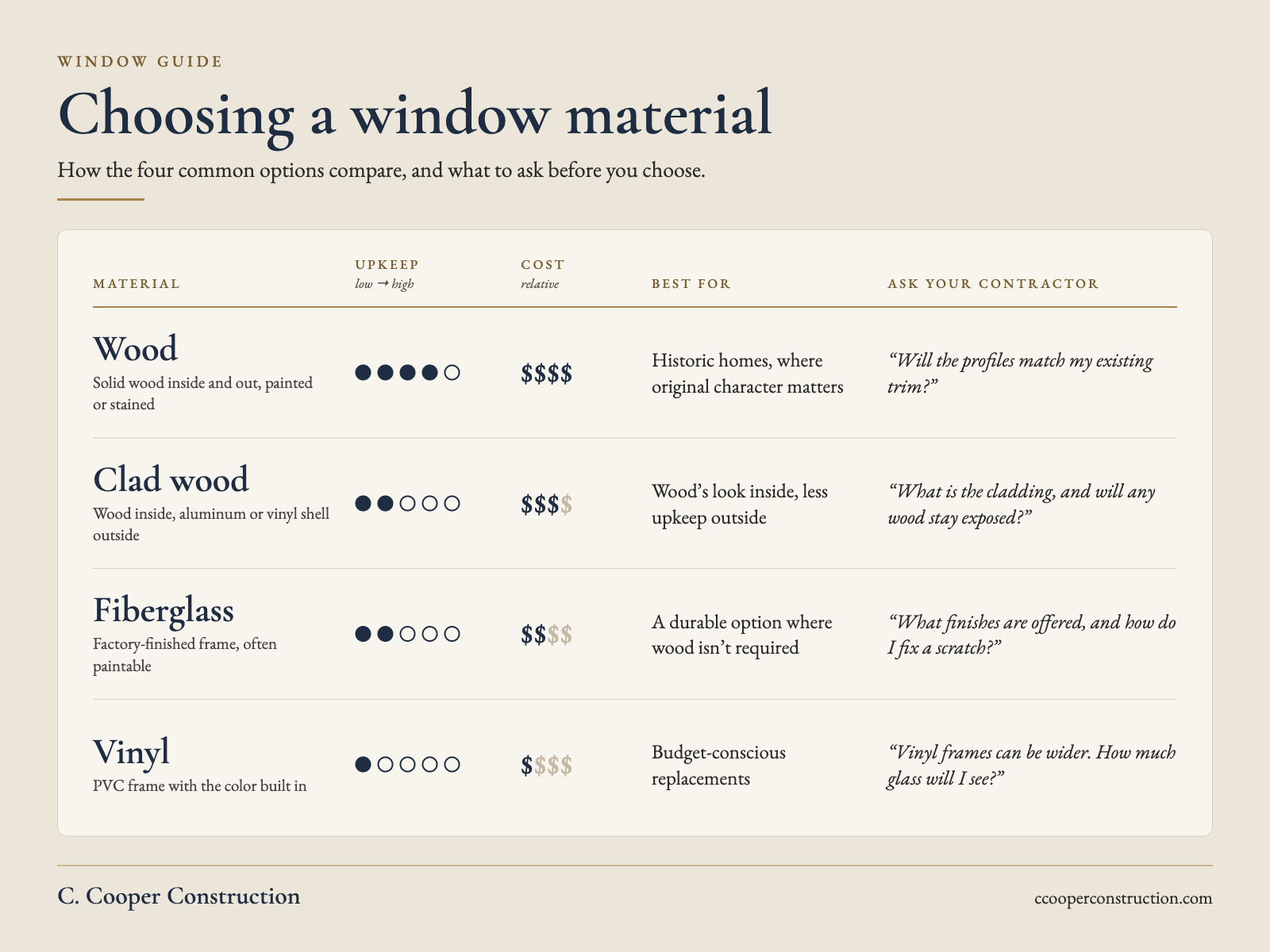
The material in the quote usually describes the window frame or sash. The trim around it may be a different material with its own maintenance needs.
If you want the windows to look right beside original trim
Ask to see a corner sample in the room where the window will go. Set it next to the existing casing, the trim around the opening. A white that looks right in the showroom may look stark beside older painted wood. And if you want a stained finish, look at a sample in the wood species and finish you’re actually ordering.
Pay attention to how much of the opening will still be glass. If the new window fits inside the old frame, the two frames can take up more of the opening. That difference is easier to spot on a narrow window, where even a modest change at each edge can make the glass look noticeably smaller. Ask for the visible glass dimensions of the proposed installation so you can compare them with what you have now.
If you still have original windows, especially across the front of the house, look at them together from the street. Notice where the horizontal rails line up and how wide the pieces dividing the panes are. Those details can matter as much as the material. Have the originals assessed for repair before deciding to replace them.
If you want less exterior maintenance
Start by figuring out what you’ve been repainting. Is it the window itself, the sill below it, or the trim around it? A clad wood window can give you a painted wood interior and a protected exterior, but if the original wood sill and trim stay, those pieces still need care.
This is a good question to ask while you’re standing outside with your contractor. Have them point out which pieces the quote includes, which will stay, and which surfaces you’ll need to maintain. That’s particularly helpful for an upstairs window where reaching the trim is half the job.
If two quotes are thousands of dollars apart
Start with the manufacturer, product line, and glass package. Then check how each contractor plans to install the window. One quote may price an insert that fits within the existing frame. Another may price removing the old frame, installing a new unit, and putting the trim back together. Even with the same window material, those are different jobs.
If warmth near the window is a priority, ask for the whole-window U-factor for the configuration you’re considering. A lower U-factor means less heat passes through the window. The rating accounts for the glass and frame together. Ask separately how the installer will air-seal the gap around the unit, since that’s part of the installation.
What to bring to a window quote appointment
Take one photo from inside and one from outside, then write down what matters most to you. Maybe it’s keeping the original casing, getting away from exterior painting, or keeping as much glass as possible in a small opening. If you’re still deciding whether you want a crank-out window, a double-hung, or fixed glass, start with our guide to choosing a window style for each room.
When the quote comes back, check that it answers these four questions:
What am I getting? Look for the manufacturer, product line, frame material, interior and exterior finishes, and glass package.
What will it look like once it’s in? Ask how much glass will be visible and which trim or sill pieces will stay.
What work is included? Confirm the installation method and whether the price includes removal, disposal, air sealing, and trim or finish work.
What happens if you find rot? Ask how concealed damage will be documented, priced, and approved before repairs proceed.
If you’re planning a window replacement project in Utica, New Hartford, Clinton, Hamilton, or elsewhere in Central New York, we’d be glad to walk through those decisions with you. Bring a photo of the window you’re most concerned about. It’s a good place to start, especially if there’s something about it you’d like to keep.