
How to Choose the Right Deck Material: Composite, PVC, Pressure-Treated, Cedar, or Hardwood?
Planning a new deck is exciting — but choosing the right decking material can feel overwhelming. Composite, PVC, pressure-treated lumber, cedar, mahogany, ipe, sapele: the options pile up quickly, and they rarely sort themselves out.
If you've spent any time researching online, you've probably found plenty of opinions, manufacturer claims, and "Top 10" lists telling you which material is supposedly the best. The truth is a little less straightforward.
There isn't one best decking material.
The right choice depends on your budget, your home's architecture, how you plan to use the space, and — perhaps most importantly — how you actually live. Do you want to spend weekends staining a deck because you enjoy caring for your home, or would you rather spend those weekends with family and friends? Will your deck sit in full afternoon sun where children will play barefoot? Are you restoring a historic home where natural materials are part of its character?
Every homeowner's answer is different. That's why we don't begin by recommending a product. We begin by learning how you plan to use your outdoor space.
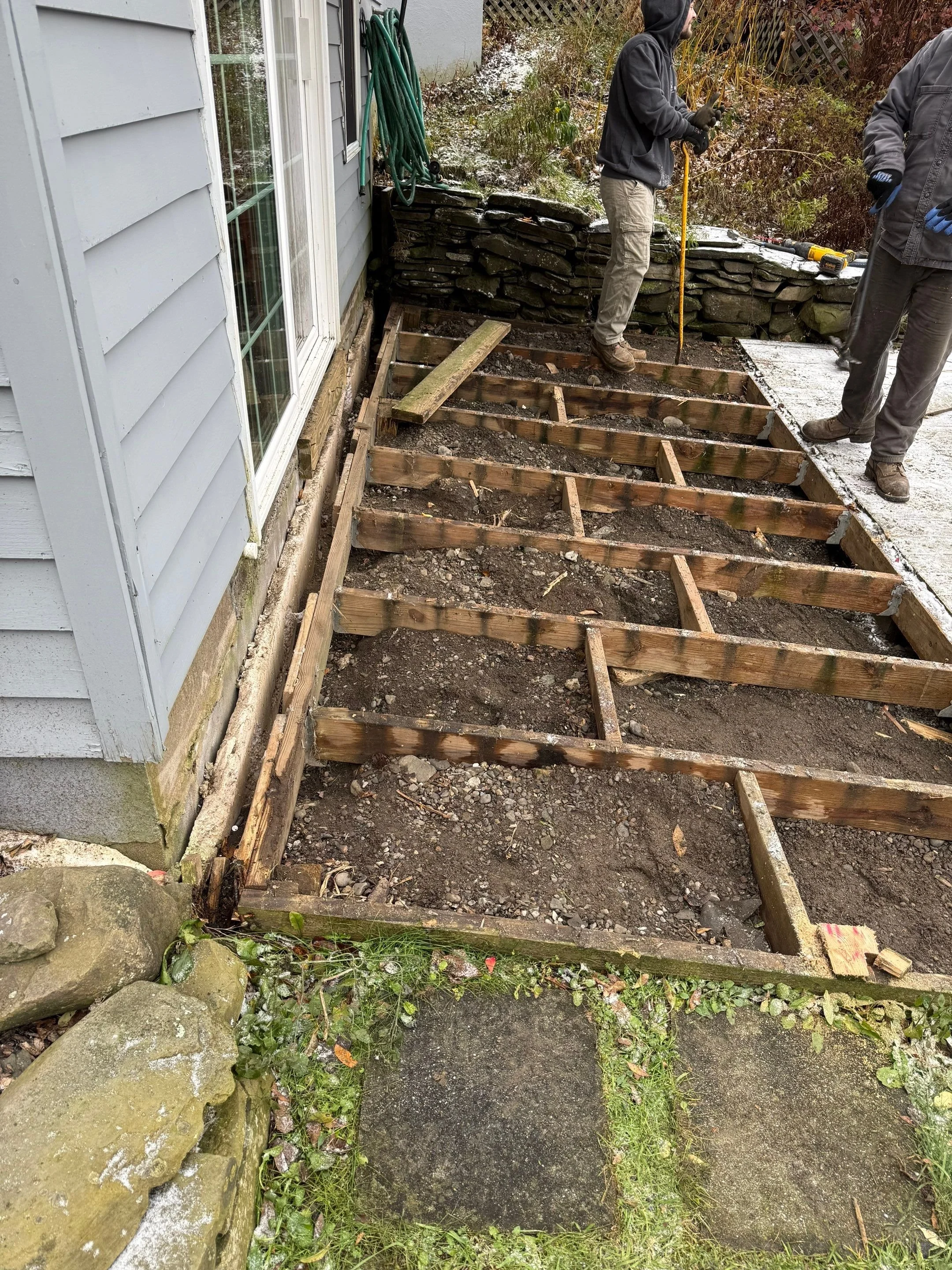
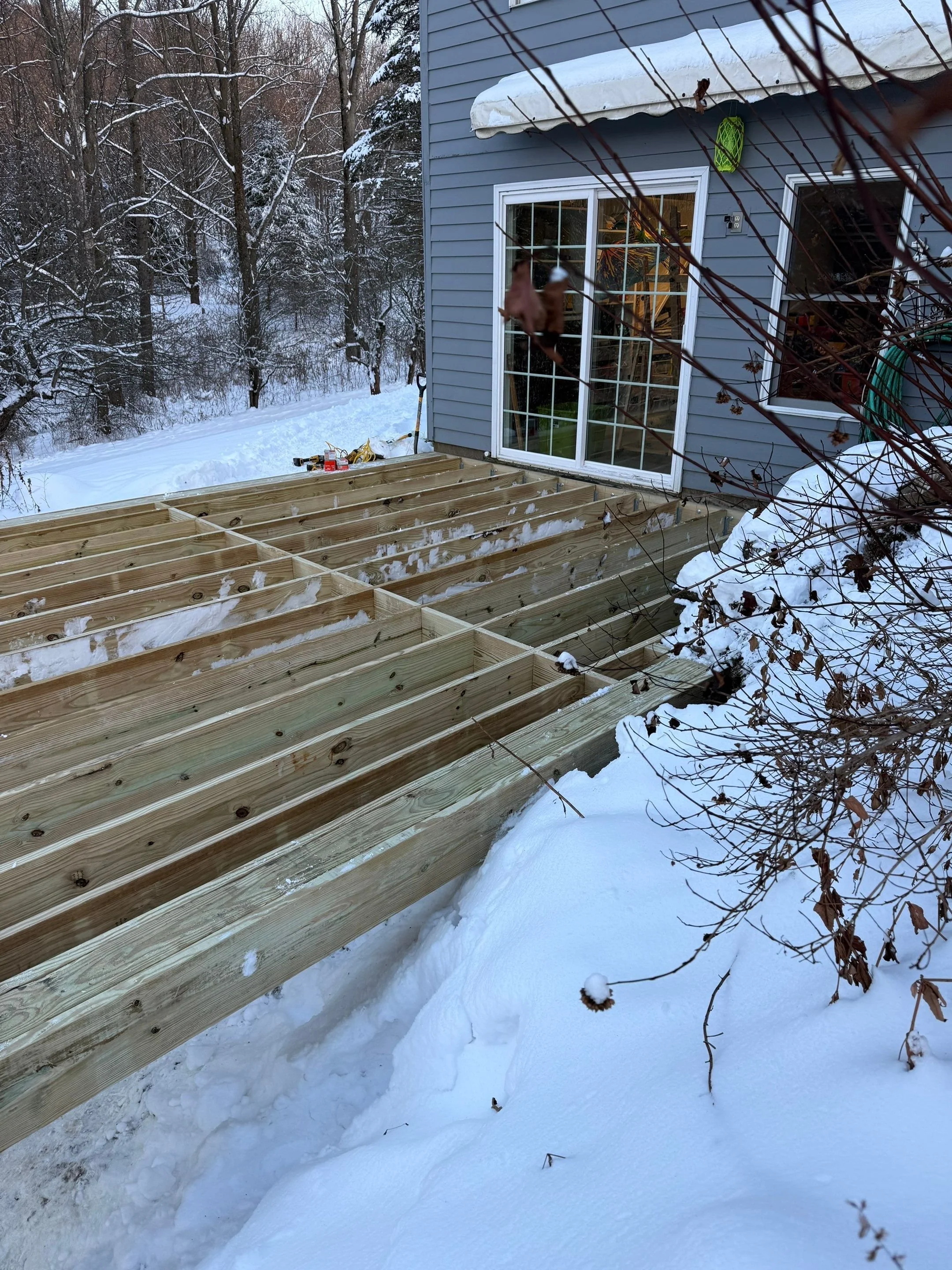
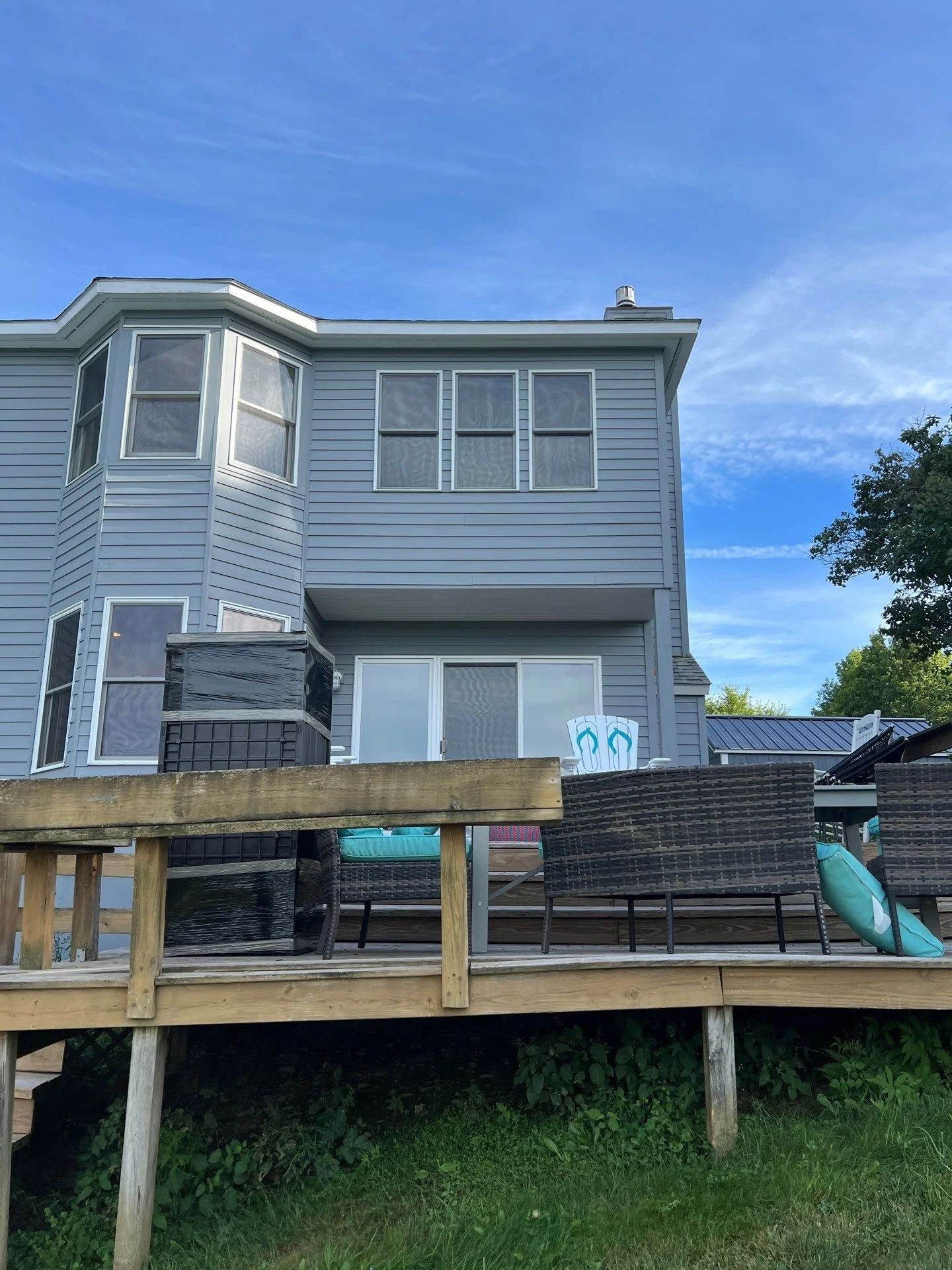
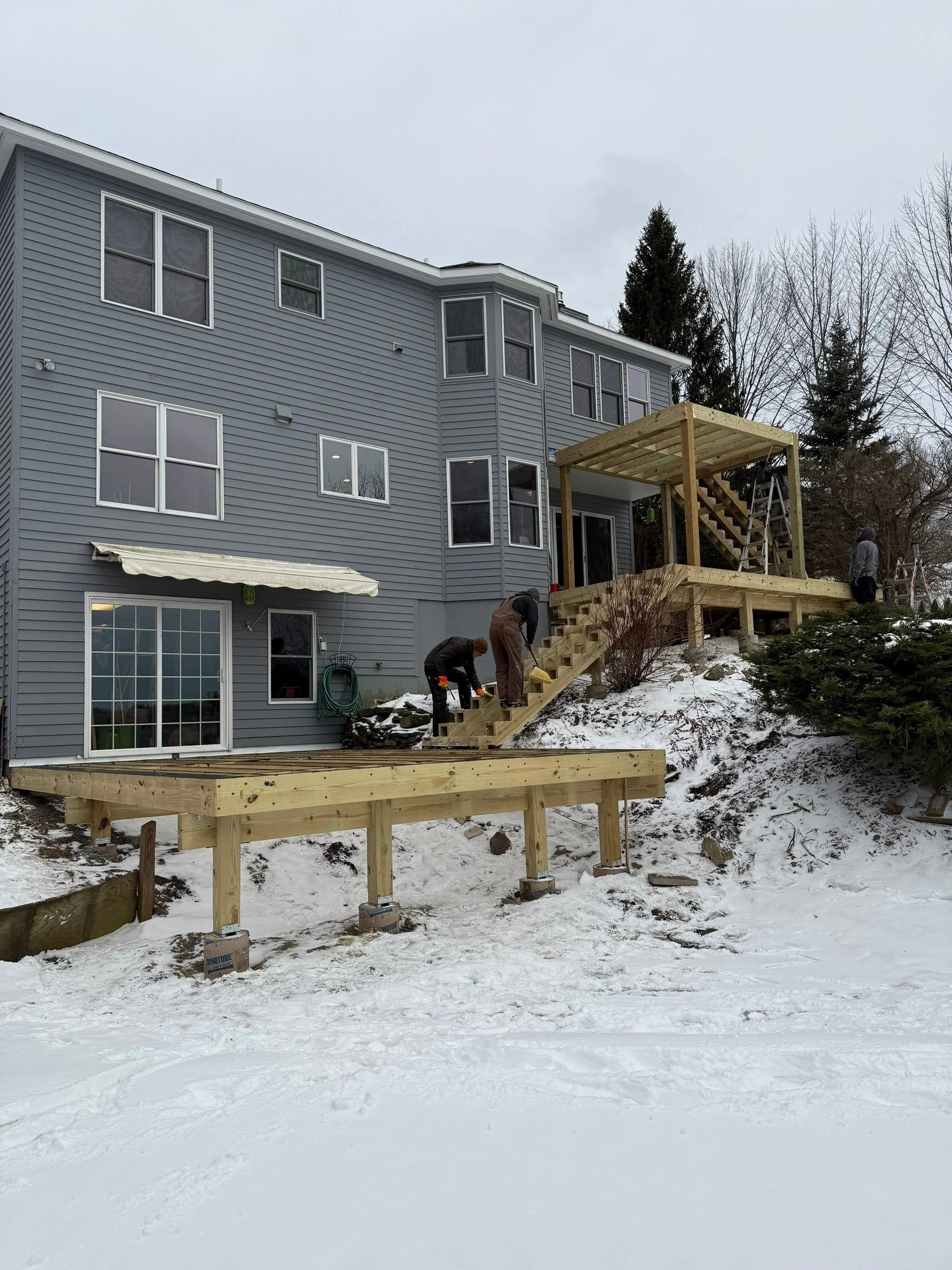
Failing framing was removed as part of a deck re-construction, which included the addition of a second story balcony.
The Most Important Part of Your Deck Isn't the Part You'll See
Before we compare decking materials, there's something we believe every homeowner should know: the decking boards themselves are only one part of a well-built deck.
Much of what determines whether a deck lasts fifteen years or thirty is hidden beneath the finished surface — proper footings, quality framing lumber, thoughtful drainage, correct flashing where the deck meets your home, corrosion-resistant structural connectors, and protection for the framing from moisture before the decking is ever installed.
Those details aren't nearly as exciting as choosing decking colors. But they're often far more important. The highest-end decking material in the world can't compensate for poor construction underneath it, and a thoughtfully built pressure-treated deck may well outlast a poorly constructed composite one.
Choosing the right material matters. Building it correctly matters even more.
Central New York's Climate Changes the Conversation
Here in Central New York, every deck faces the same set of challenges: heavy snow, repeated freeze-thaw cycles, humid summers, spring rains, and the leaves that trap moisture every autumn. Those conditions are demanding on every exterior building material.
Fortunately, every decking material discussed in this guide can perform beautifully here — when it's paired with thoughtful design, quality installation, and appropriate maintenance. That's one reason we focus so heavily on protecting the structure beneath the deck, not just the finished surface you see every day.
A quick note on cost before we go further. You'll see a lot of "price per square foot" figures online, but they can be misleading — most describe only the decking surface and the framing directly beneath it. The investment that actually shapes your budget often lives out of sight: footings dug below our frost line, proper flashing, railings, stairs, permits, and the groundwork that makes everything level and lasting. That's a big part of why our estimates begin with a conversation rather than a number — and why we talk about materials in relative terms here rather than quoting dollar figures.
Composite Decking
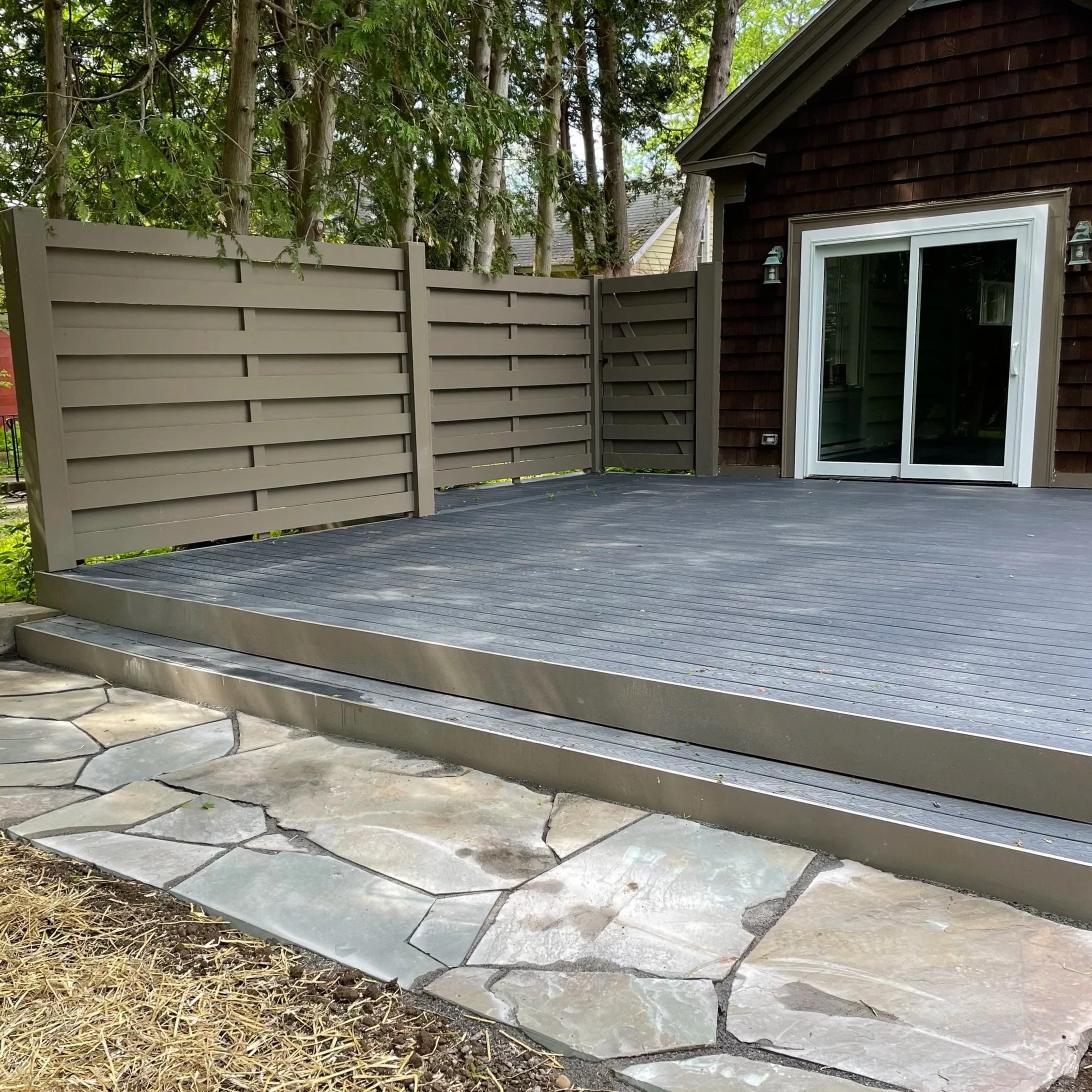
Composite decking has become one of the most popular choices for homeowners, and it's easy to understand why. Manufacturers like Trex®, Fiberon®, MoistureShield®, and several Deckorators® product lines combine recycled wood fibers with plastic polymers, then add a durable protective cap. The result captures much of the appearance of real wood while dramatically reducing the ongoing maintenance many homeowners hope to avoid.
Composite may be right for you if you:
Want to avoid routine staining and sealing
Prefer lower long-term maintenance
Like the wide variety of colors and finishes available
Have children or pets and want to eliminate the splinters that natural wood can develop over time
Plan to stay in your home for many years
Unlike pressure-treated lumber, composite decking doesn't go through the same drying process that causes freshly installed wood to shrink or develop surface checks as it acclimates.
Relative cost: a mid-to-upper investment among decking materials. Typical lifespan: 25–30 years or more with minimal care.
From Our Experience
One family we met absolutely loved their composite deck. It had held up beautifully, required very little maintenance, and still looked great years after it was built. The only thing they wished they'd done differently? They chose a very dark gray color. On sunny summer afternoons, the decking became hot enough that their young children often couldn't comfortably play barefoot.
There was nothing wrong with the material — it simply wasn't the best color for the way their family used the space. If your deck will receive full afternoon sun and you expect kids or pets to spend a lot of time outdoors, it's worth considering lighter colors. They often stay noticeably cooler while offering the same low-maintenance benefits.
PVC Decking
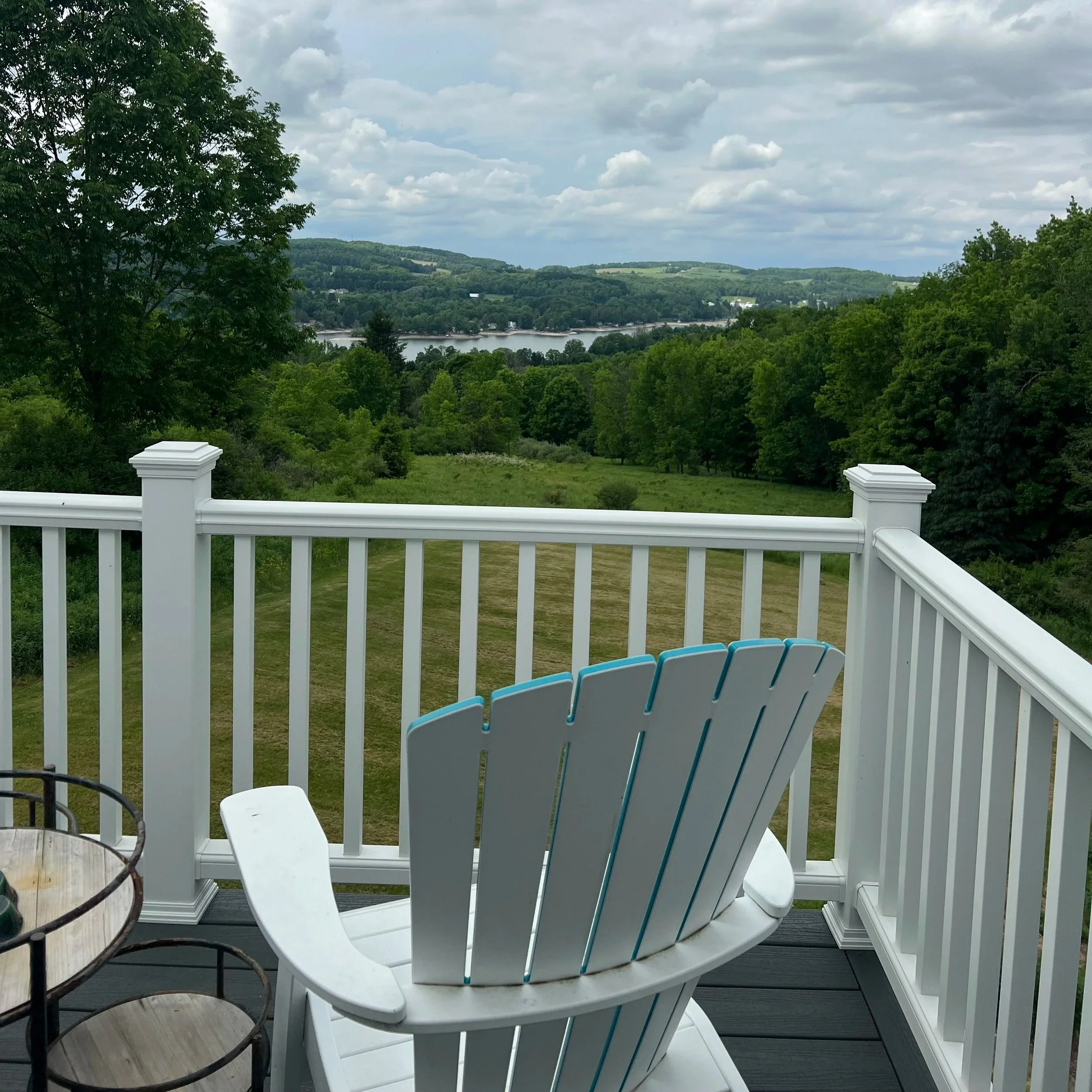
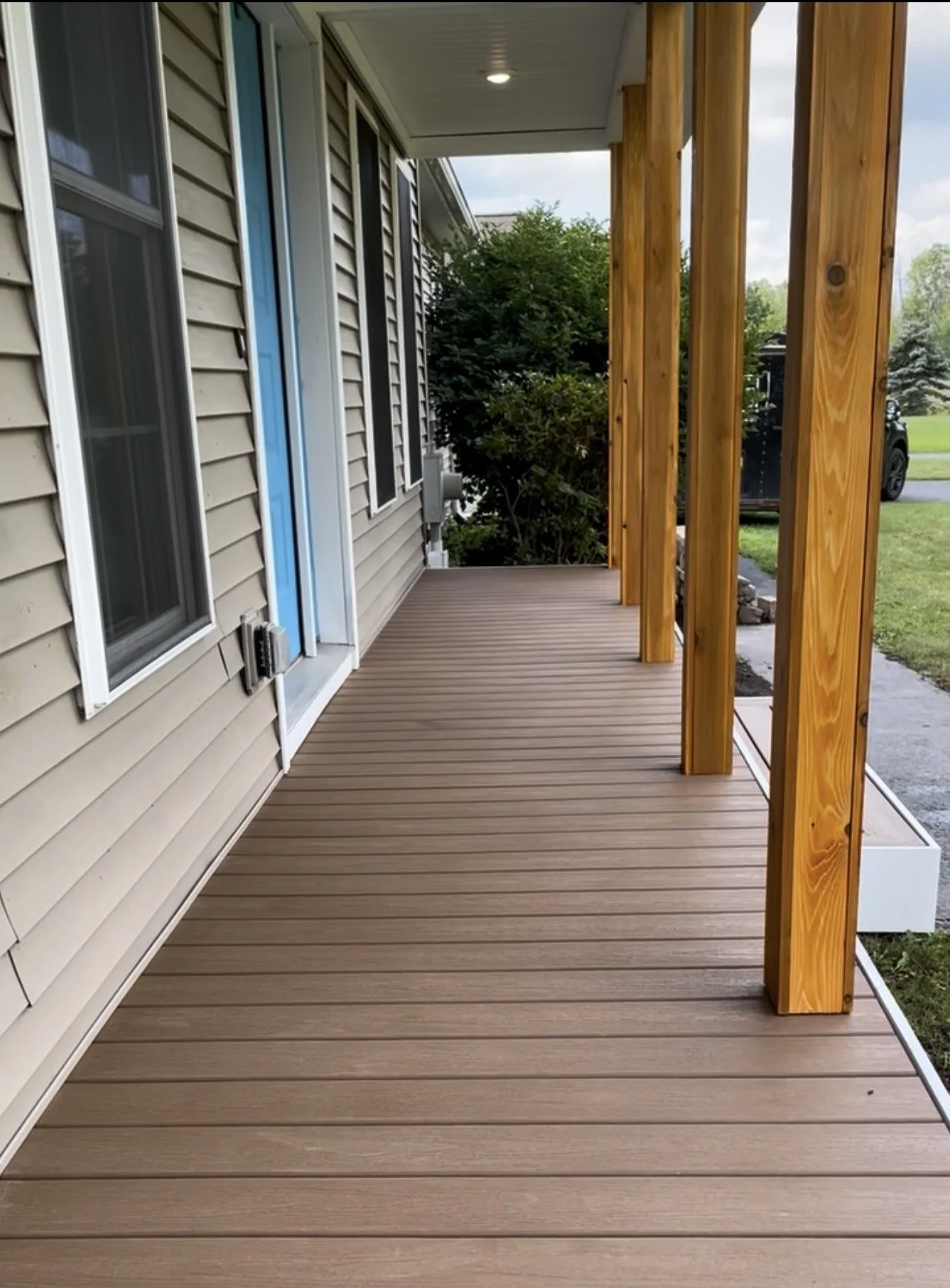
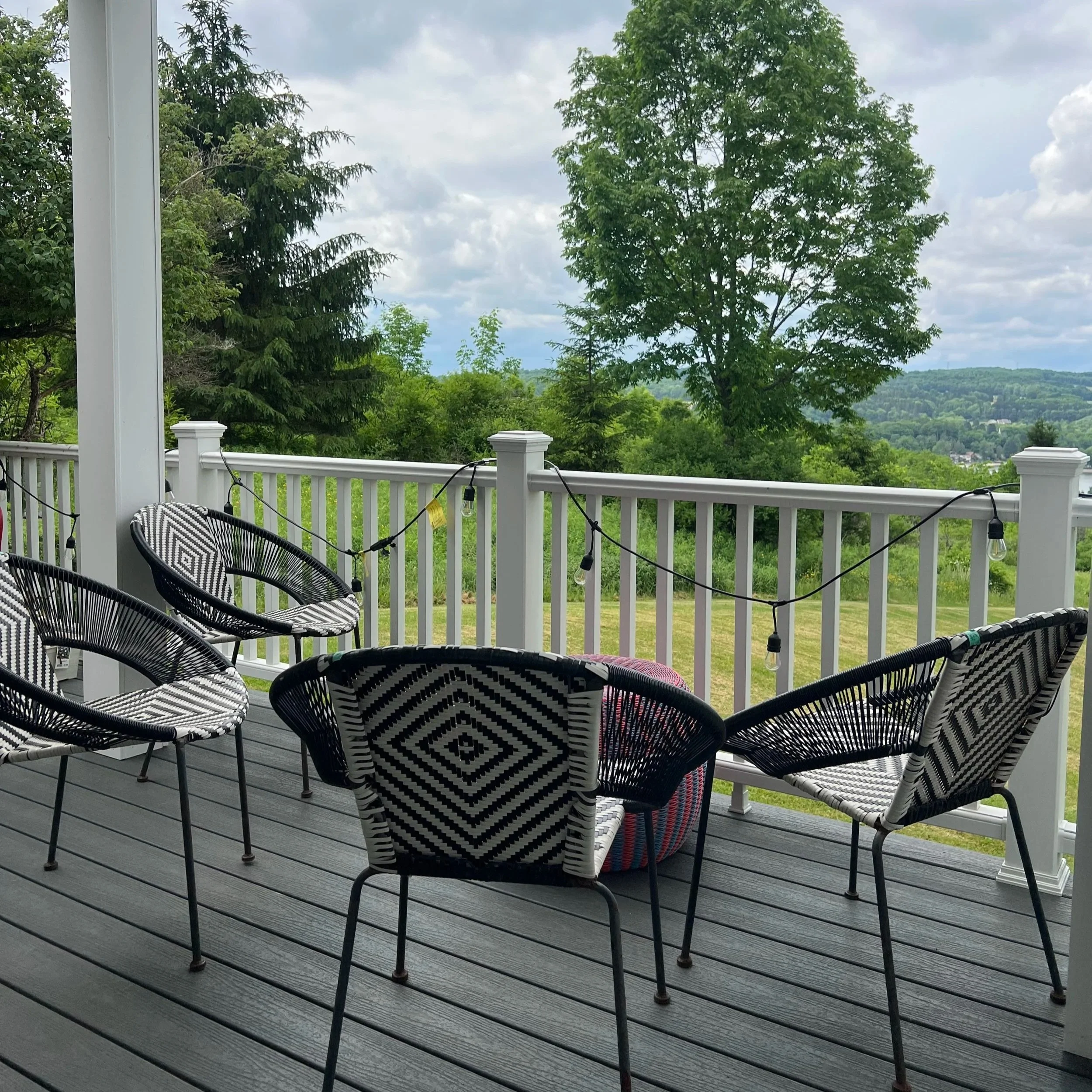
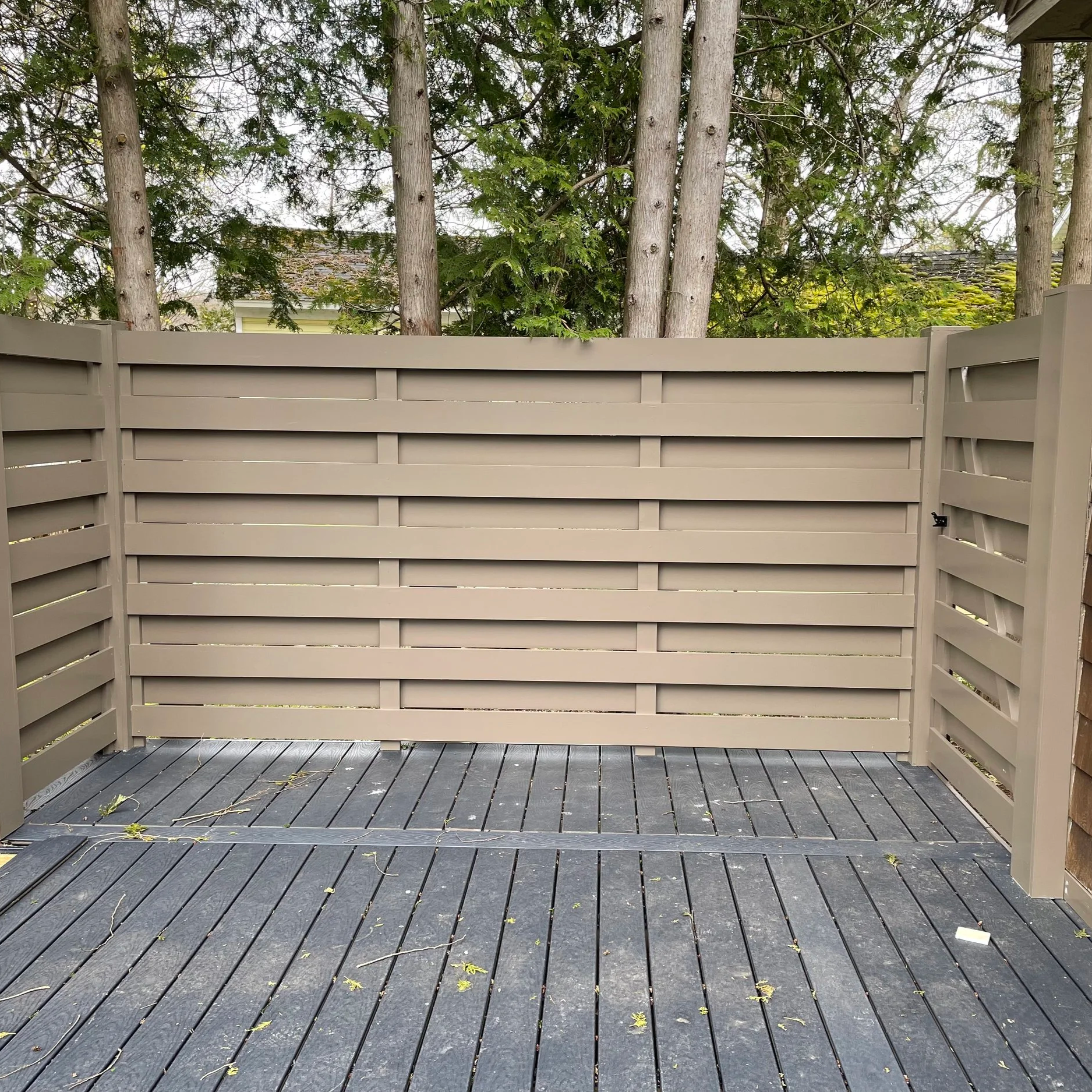
PVC decking is often discussed alongside composite because both offer excellent durability with minimal maintenance. While they share many similarities, PVC is a different product. Rather than blending wood fibers with plastic, PVC decking is manufactured entirely from cellular PVC. Because it contains no wood fiber, it absorbs very little moisture and offers exceptional resistance to mold, mildew, insects, and moisture-related deterioration. Popular examples include TimberTech® Advanced PVC, Wolf Serenity®, and CertainTeed EverNew®.
PVC may be right for you if you:
Want one of the lowest-maintenance decking materials available
Have a particularly wet or shaded location
Value long-term durability
Prefer not to perform routine refinishing
PVC generally represents one of the larger upfront investments among decking materials, but many homeowners find the convenience well worth it for years to come.
Relative cost: among the higher upfront investments in decking. Typical lifespan: 30 years or more, with premium capped lines often lasting longer.
Pressure-Treated Lumber
Pressure-treated lumber has been used to build decks for generations, and it remains an excellent option for many homeowners. It offers the lowest initial investment of the materials discussed here while providing the warmth and authenticity of real wood.
Pressure-treated lumber may be right for you if you:
Prefer natural wood
Want to keep upfront costs lower
Don't mind periodic maintenance
Enjoy caring for your home
Like any natural material, pressure-treated lumber changes over time. It may shrink slightly as it dries, develop surface checks, and require periodic cleaning and refinishing to maintain its appearance and protect it from the weather.
Relative cost: the most economical option discussed here. Typical lifespan: 15–20 years with regular cleaning, sealing, and maintenance.
From Our Experience
One homeowner called us because they were worried their deck had become dangerously slippery after it rained. They assumed it was beginning to fail. Fortunately, that wasn't the case. The deck was structurally sound. What had accumulated over the years was a layer of dirt, pollen, algae, and organic debris that became slick when wet.
After a thorough cleaning, the deck looked dramatically better and was noticeably less slippery. It's a good reminder that maintenance isn't only about keeping a deck attractive. Regular cleaning removes organic buildup, improves traction, and helps protect the wood before it's time to stain or seal it again.
Cedar Decking
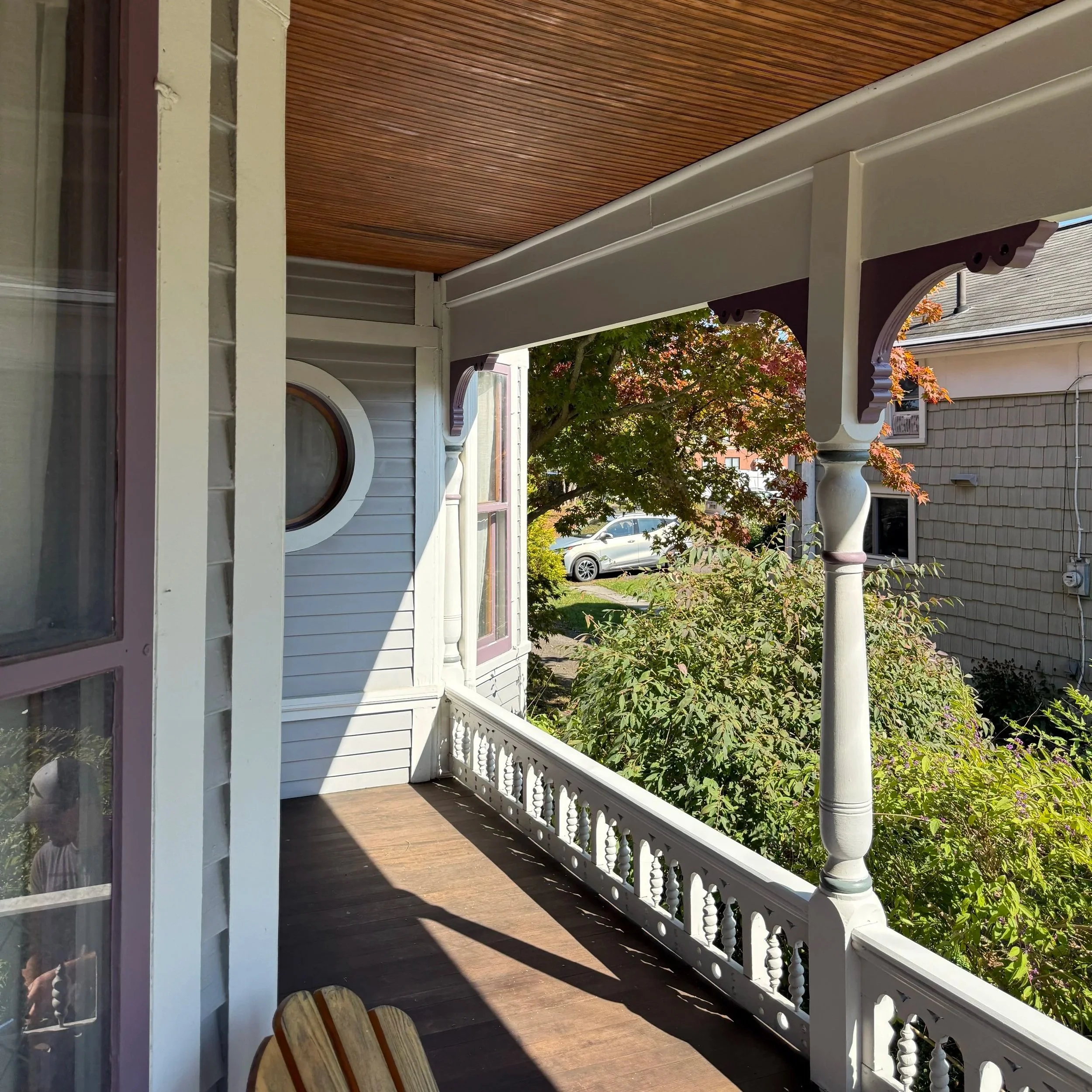
For many homeowners, nothing compares to the warmth and character of real cedar. Its beautiful grain and natural appearance create outdoor spaces that feel inviting from the moment they're finished. Cedar is especially appealing to homeowners who appreciate natural materials and don't mind the ongoing care they require.
Cedar may be right for you if you:
Love the look and warmth of natural wood
Appreciate a material that ages with character
Don't mind periodic cleaning and refinishing
Want a natural alternative to pressure-treated lumber
Because cedar is softer than many other decking materials, it can show dents and wear a little more easily in high-traffic areas. Left without periodic maintenance, it naturally weathers to a beautiful silvery gray — a look some homeowners intentionally embrace.
Relative cost: a modest step up from pressure-treated. Typical lifespan: 20–30 years with regular staining or sealing.
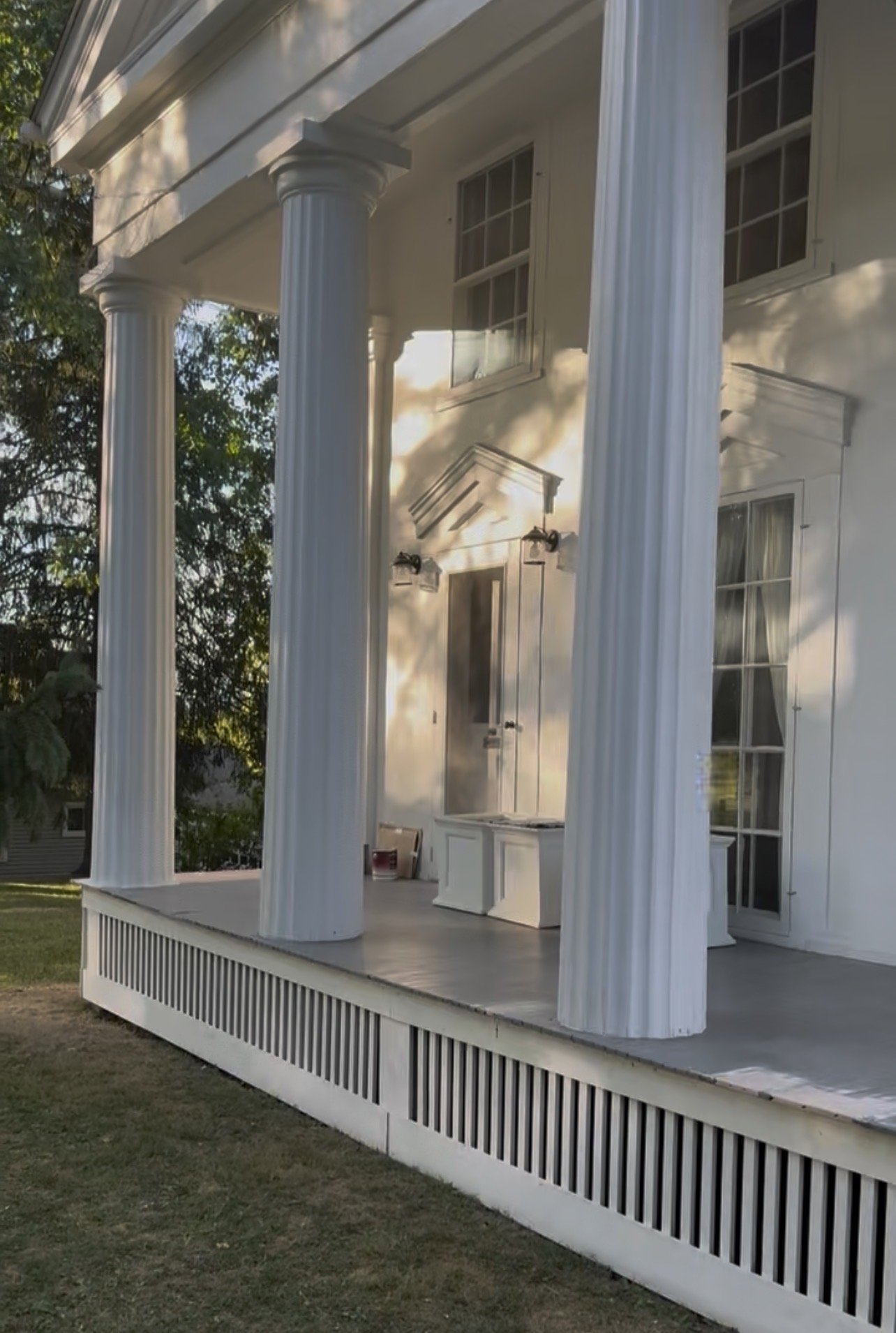
Greek Revival porch restoration in progress -
Hamilton, New York
With proper care & maintenance, the right decking can last for decades.
Premium Hardwood Decking
Some decks are designed to blend into the background. Others become part of the home's architecture. Premium hardwoods like mahogany, ipe, and sapele fall into that second category. These materials are chosen not because they're trendy, but because they're beautiful, incredibly durable, and capable of creating truly remarkable outdoor spaces.
Premium hardwood may be right for you if you:
Want real wood with exceptional natural durability
Are building a forever home or restoring a historic one
Value craftsmanship and the way natural materials age over time
Want a deck that reads as part of the home's architecture, not an addition to it
Mahogany offers rich color, timeless elegance, and a natural complement to historic homes and traditional architecture. Ipe is one of the hardest and most durable decking materials available — naturally resistant to insects, decay, and wear, and exceptionally long-lasting when properly installed. Sapele brings warm tones similar to mahogany, paired with distinctive ribbon-like grain patterns that create exceptional visual depth.
Relative cost: the premium tier — typically the largest material investment of the options here. Typical lifespan: 40 years or more with proper installation and a regular refinishing schedule, with ipe and sapele sitting at the upper end.
From Our Experience
Homeowners who choose hardwood decking rarely do so because they're looking for the easiest or least expensive option. They choose it because they appreciate craftsmanship. They want real wood. They enjoy the way natural materials age gracefully. And they're looking for a deck that's every bit as thoughtfully crafted as the home it surrounds.
So... Which Deck Material Is Right for You?
If you're looking for the lowest maintenance possible, composite or PVC decking may be the right fit. If you appreciate natural wood and don't mind periodic upkeep, pressure-treated lumber or cedar continue to be outstanding choices. And if you're building a forever home — or restoring a historic one — where craftsmanship matters as much as convenience, premium hardwoods deserve serious consideration.
The best decking material isn't the one with the biggest advertising budget. It isn't necessarily the most expensive, and it isn't always the one your neighbor chose. The best decking material is the one that supports the way you live.
That's why our conversations rarely begin with brands or brochures. Instead, we ask questions. How do you want to use the space? Do you enjoy maintaining natural materials, or would you rather spend your weekends relaxing? Will your grandchildren be running across this deck barefoot? How long do you hope this investment will serve your family?
The answers to those questions matter far more than choosing between one product and another.
At C. Cooper Construction, we believe every homeowner deserves honest guidance — not a sales pitch. Whether your project calls for pressure-treated lumber, cedar, composite, PVC, or a handcrafted hardwood deck, our goal is always the same: to help you build an outdoor space that's thoughtfully designed, beautifully constructed, and a joy to use for decades to come. Find out more here: Decks, Porches & Patios