
What Your Old Windows Are Actually Telling You
A Central New York homeowner's guide to repair vs. replacement
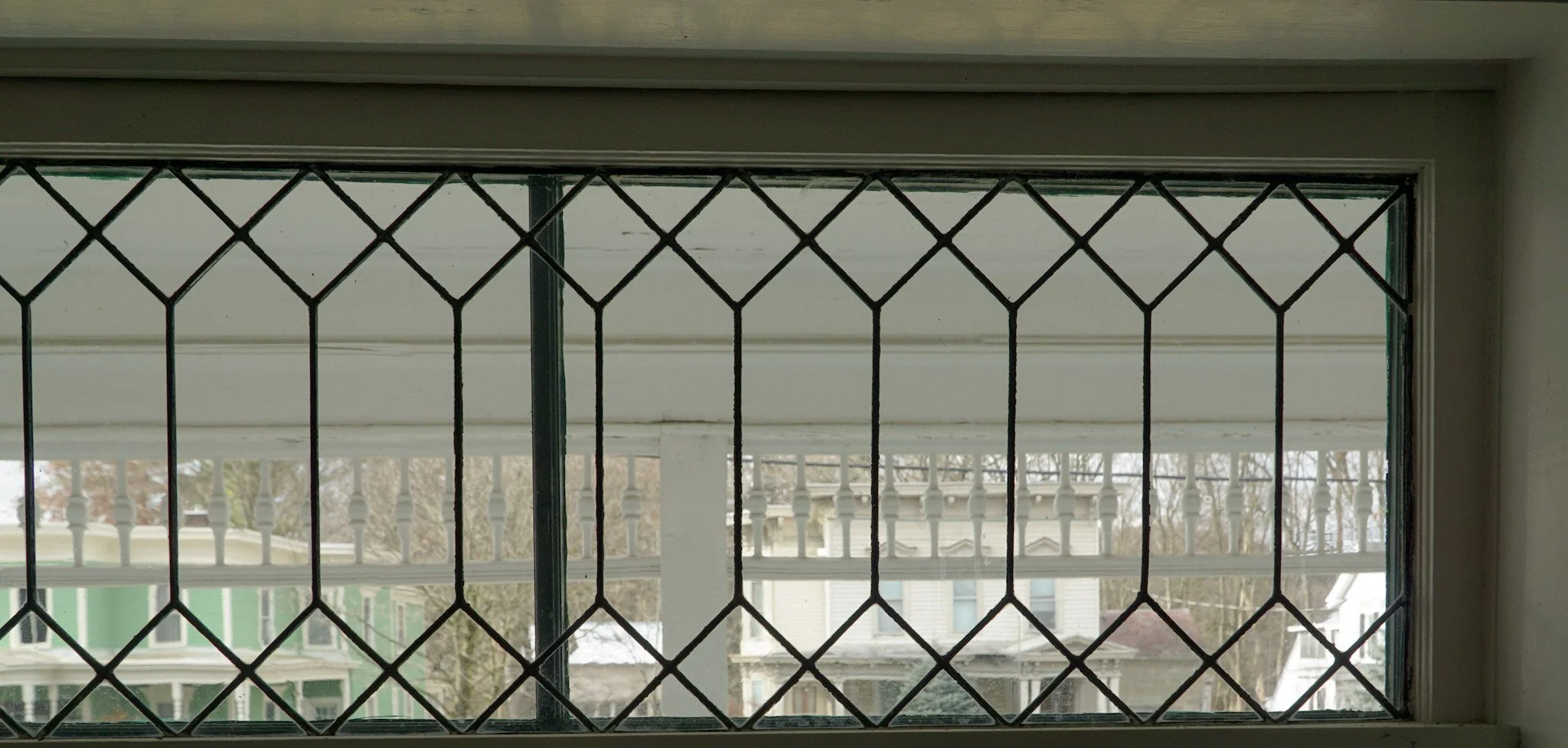
Original leaded diamond-pane window, circa 1825.
Drive slowly past an old house in Hamilton or Cazenovia and look only at the windows. Not the porch, not the rooflines — the windows.
On a lot of the homes we work in, something gives itself away. They don't match. A pair of tall, original sash with the faint ripple of century-old glass sits beside a squat vinyl unit with flat, lifeless panes. Upstairs, a third style entirely. Somewhere along the way, a window failed, someone replaced that one, and the house has been wearing the evidence ever since — one decision at a time, rarely the same decision twice.
This is the part most homeowners don't expect to hear when they ask us whether it's time to replace their windows. Because the honest first question usually isn't should I replace these old windows. It's what do I actually have — and what was already changed before I got here?
That distinction matters more than almost anything else in this decision, and it's where we'd like to begin.
The question underneath the question
Replacement windows are a real investment, so it's reasonable to want a clear answer before spending the money. The trouble is that "my windows are old" and "my windows are failing" get treated as the same sentence, and they aren't.
Age, on its own, tells you very little. We've stood in 1840s farmhouses where the original wood sash still glide on their cords and seal better than the vinyl units someone installed in the 1990s to "fix" them. We've also opened up walls beneath windows that looked fine and found a much longer story.
So rather than starting with the windows themselves, we start by reading what the house is telling us. Here is what we look for, and what each sign tends to mean.
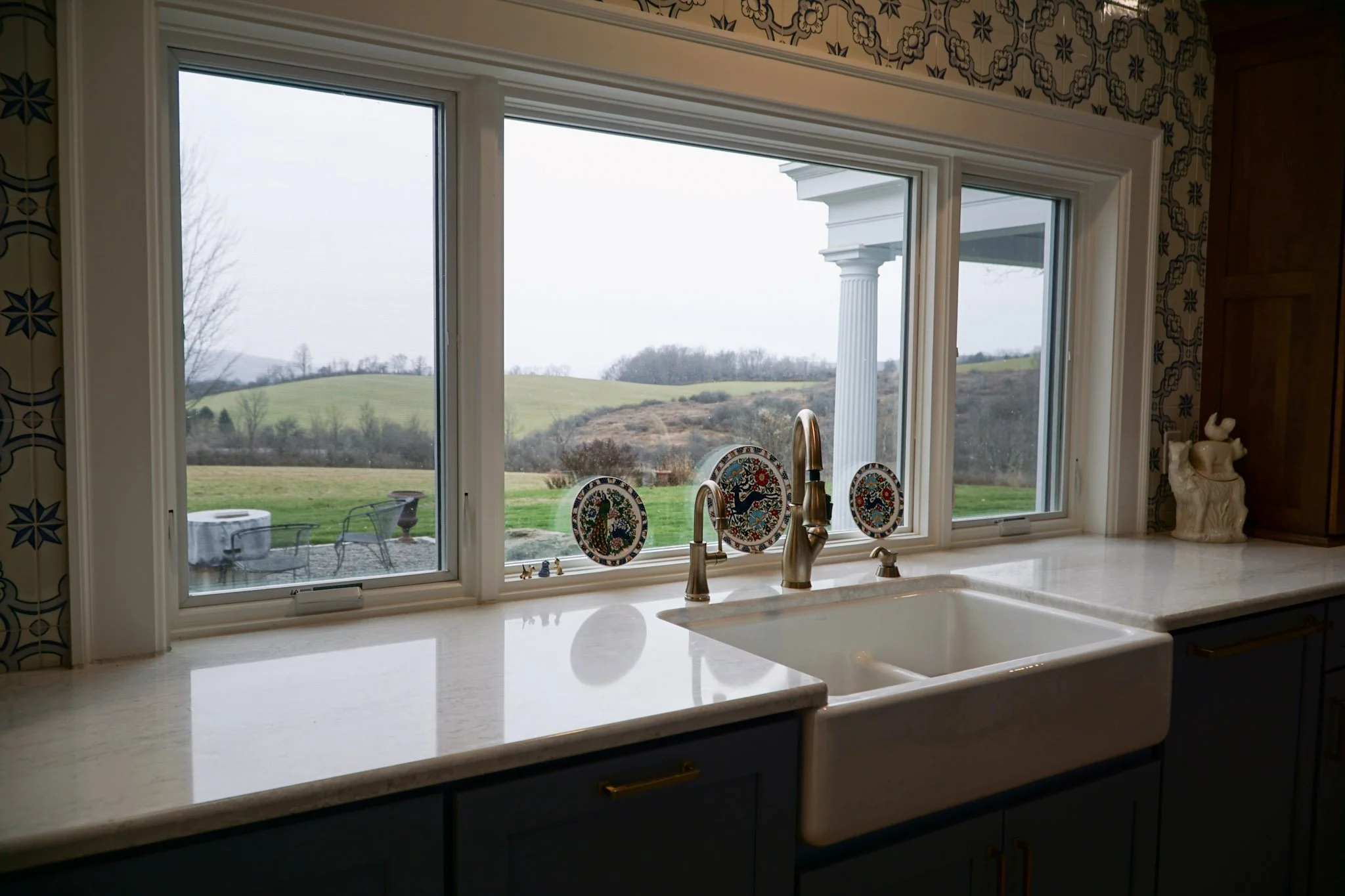
A fixed window in the center, with casement windows on either side.
When the wood has started to go
The clearest case for serious intervention is real deterioration in the frame, sash, or surrounding trim. Wood windows move — they expand and contract with the season — and once failed paint or a neglected joint lets water in, decay can follow. You can usually feel it before you can prove it: wood that gives slightly under a thumb, paint peeling over something soft beneath, a sill that takes a screwdriver tip far more easily than it should. Discoloration and a musty, earthy smell often arrive with it.
What surprises people is how much of this is repairable. Localized rot in an otherwise sound window is routine restoration work, not a death sentence. Depending on what we find, that can mean epoxy consolidation to stabilize and rebuild compromised wood, a dutchman — a patch of matched, sound timber let into the spot where rot was cut away — or replacing a single failed component rather than the whole assembly. The National Park Service makes this point in its guidance on historic wooden windows, and we've found it true on the jobsite: repairing and weatherizing original wood is far more practical than most homeowners assume.
The deciding factor isn't whether rot exists. It's whether it's isolated and reachable, or whether it has spread far enough that chasing it stops making sense. One soft corner is a repair. A frame that's gone in four places, with the trim and the wall behind it following, is a different conversation.
One caveat worth holding onto: before any repair, the water that caused the decay has to be found and stopped. Fixing the wood without fixing the source just resets the clock.
When the glass fogs from the inside
If you see haze or moisture trapped between the panes — the kind you can't wipe away — you're looking at a failed insulated glass unit, and almost by definition that's a modern window, not an original one.
A double- or triple-pane window earns its efficiency from a sealed cavity between the panes. When the perimeter seal lets go, the desiccant meant to keep that cavity dry eventually saturates, the insulating gas slips out, and condensation forms where no cloth will ever reach it. The fog is the window admitting that its seal is gone.
That doesn't condemn the whole unit. Sometimes the glass package alone can be replaced while the existing frame and sash stay. With cheaper windows, the math often tips the other way and full replacement makes more sense. Either way, the condition of the entire window — not the foggy glass alone — should drive the call.
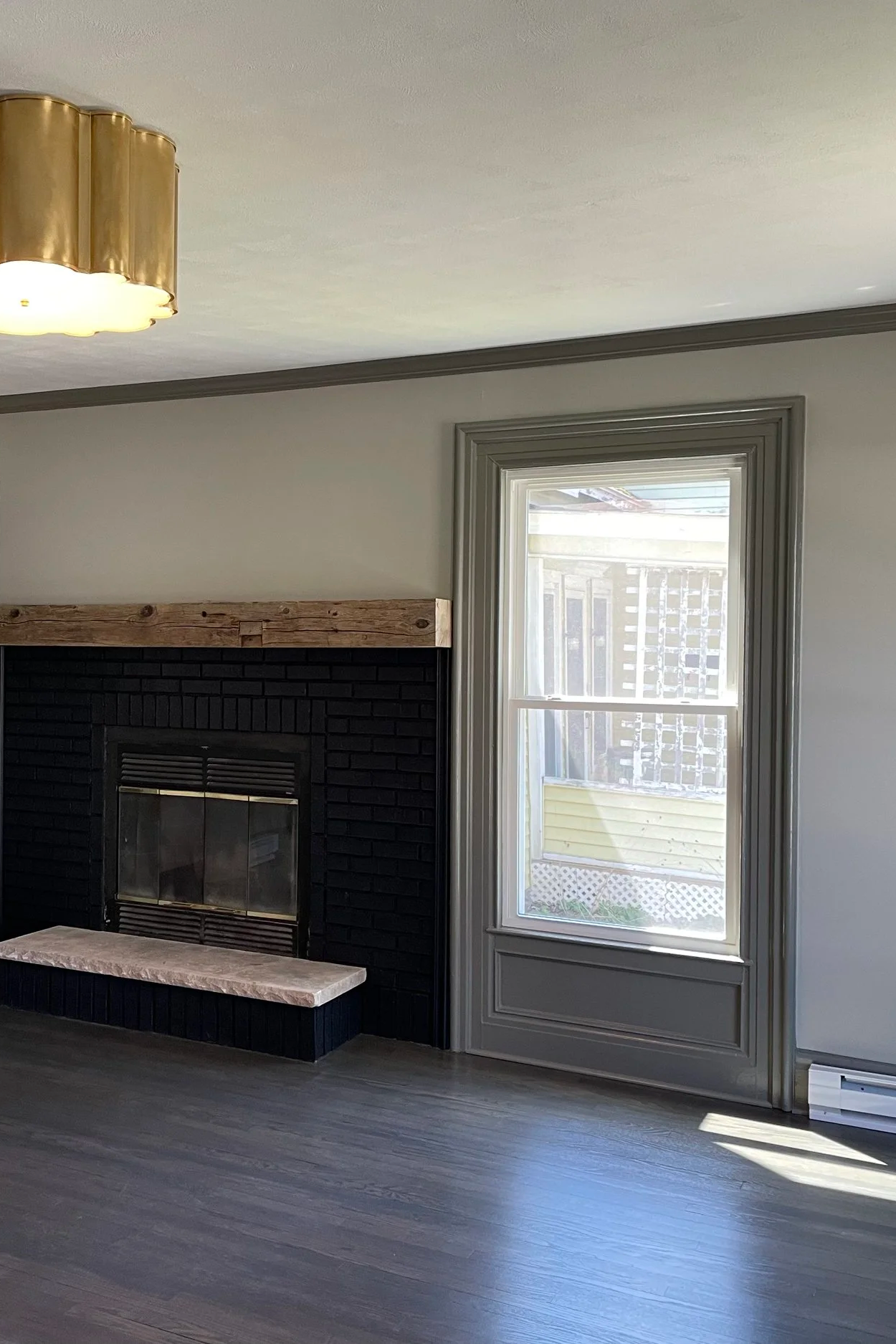
Before.
A vinyl replacement window.
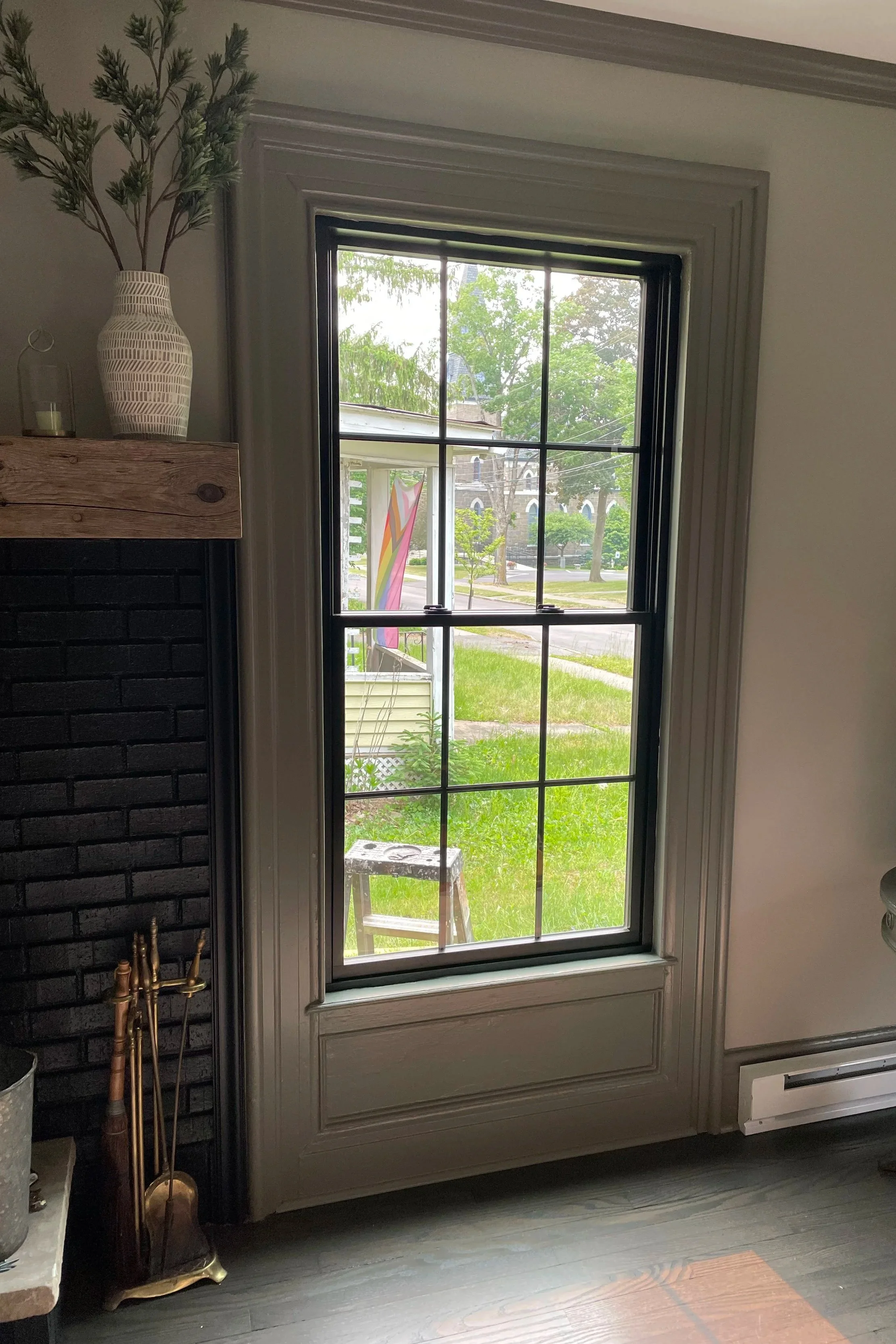
After.
Wood replacement windows were installed throughout this home, originally constructed in 1864.
When you can feel the outside from across the room
Drafts are the most common complaint we hear, and the most commonly misdiagnosed. A draft is a symptom, not a diagnosis.
Air finds its way in for a handful of reasons, most of them fixable: worn weatherstripping, failed caulk, a sash that no longer sits true, the slow settling of an old building, or — and this is the one homeowners rarely suspect — a replacement window that was installed poorly the first time. Before anyone spends money on new units, the actual leak path is worth finding. We've made old, drafty rooms genuinely comfortable with work that cost a fraction of replacement.
When the draft persists despite all that — when the window's design simply can't seal anymore, or it's too far gone to bring back — replacement becomes the sounder long-term answer. The point isn't to avoid replacing. It's to replace because the diagnosis earned it.
When the window won't do its job
A window should open, close, lock, and hold where you leave it. When it sticks, binds, or refuses to move, it's worth asking why before assuming the worst. Painted-shut sash, a broken cord, a failed balance, a warped frame, misaligned hardware — in older windows these are often repairable, and in newer ones, replacement parts can restore function.
The concern is when operation problems travel in a pack with real deterioration or structural movement. One stubborn window is maintenance. A whole house of them, each failing in its own way, is the house telling you something larger.
When water is getting in around the opening
Water is patient and it is destructive, so staining on drywall, soft casing, peeling paint around the opening, or moisture that appears during a driving rain all deserve quick attention.
Here is the part we most want homeowners to hear: the window itself is frequently innocent. A great many "window leaks" actually originate in the flashing, the siding, the trim details, or the way water is — or isn't — being directed away from the opening. Modern building science treats a window as one layer in a system designed to shed water and drain whatever gets past the first line of defense. When that system is compromised, replacing the window changes nothing, because the window was never the problem.
Understanding where the moisture truly comes from has to happen before any decision. We've seen new windows installed into the same failing detail that ruined the last ones — a costly way to learn that the opening, not the unit, needed the attention.
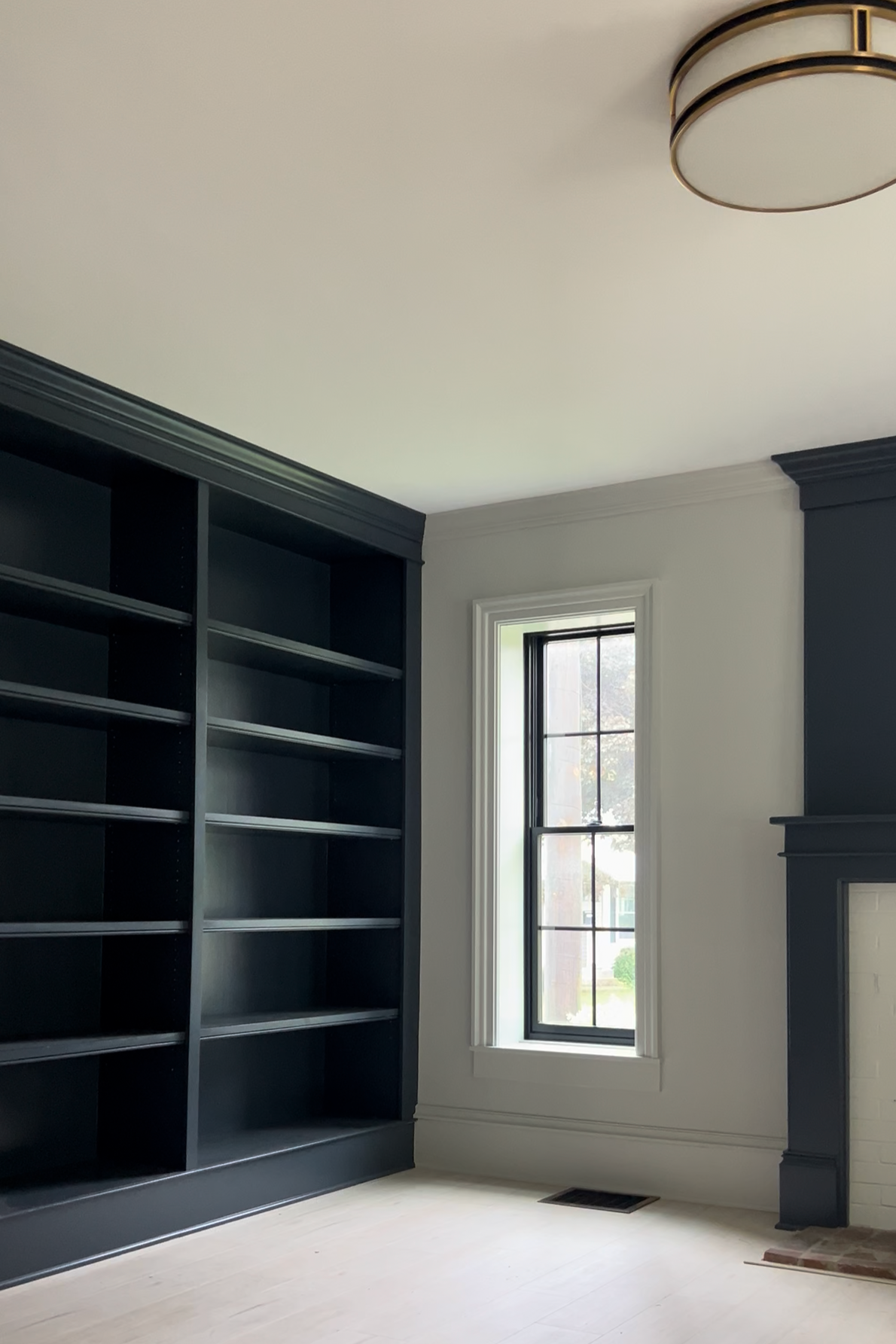
A custom replacement window.
When the upkeep stops being worth it — to you
Maintenance is where this stops being purely technical and becomes personal, and that's appropriate.
Some homeowners genuinely enjoy tending original wood windows — the rhythm of scraping, painting, reglazing, keeping something beautiful alive. Others have no wish to spend a weekend that way and would rather think about their windows as little as possible. Neither instinct is wrong. They're just different lives.
If keeping up with your windows has become a low hum of frustration, replacement can be a real improvement in ease and peace of mind, and that benefit is legitimate. If the upkeep feels like stewardship rather than burden, well-maintained wood windows can keep serving a house for generations — many already have. Your appetite for the work belongs in the equation alongside the condition of the wood.
When it's really about comfort
Often what sends someone looking at replacement isn't a single window at all — it's a house that feels cold in January, stuffy in July, loud near the road, or expensive to keep at any temperature.
Modern windows do help here. Low-emissivity coatings, insulated glass, better weatherseals, and improved frame materials have moved the performance of a good window a long way in a few decades. But windows are one instrument in a much larger ensemble. Insulation, air sealing, the state of the attic, the wall construction, the HVAC system — these often carry as much of the comfort load as the glass does, sometimes more. New windows are a worthwhile improvement; they're rarely the whole answer, and we'd rather you know that going in than feel let down after.
What the old houses keep teaching us
Step back from the single window and a pattern emerges across the historic homes of this region — and this is where we'll be candid about something we see constantly.
In a great many of these houses, the "original windows" are already gone. Not all at once, and not by any plan. A sash failed one winter and got swapped for whatever the budget allowed that month. A few years later, another. Over decades, the house accumulated a patchwork — original wavy glass here, a builder-grade vinyl unit there, three or four eras of decision-making stacked on one façade. And more often than we'd like, those one-at-a-time replacements were inexpensive vinyl, chosen quickly and installed without much thought for how the opening sheds water or how the new unit would sit against old framing.
So when a homeowner asks us whether their old windows should go, we frequently find the more useful truth is that the replacements are the ones causing the trouble — fogging, leaking, drafting — while the surviving originals are quietly outlasting them. The decision isn't always old versus new. Sometimes it's untangling what previous hands already changed, and deciding what the house should wear going forward.
After enough of these houses, you start reading a façade the way you'd read a face. The mismatched windows tell you where the money ran short, where a quick fix got chosen over a considered one, where someone meant well and reached for the nearest answer. None of it is judgment — most of those choices were made by people doing their best with what they had. It's simply information. And it's usually the first thing we notice, before we've measured a single thing.
Our philosophy: the right answer serves the house and the people in it
There's a persistent belief in our trade that old windows should simply be replaced. We don't hold to it. And we don't hold to its opposite either — that every historic window must be saved at any cost. Both are positions looking for a fight rather than an answer.
The sensible path runs straight down the middle. Repair tends to be the right call when the damage is contained, the originals carry real character worth keeping, the operation can be restored, the leaks can be chased down, and the cost of bringing them back lands well under replacement. Replacement tends to win when deterioration is widespread, several systems have failed at once, water damage runs deep, the thermal performance is genuinely poor, or the homeowner's life simply calls for something low-maintenance and reliable. Both outcomes are good outcomes when they're chosen for the right reasons.
Our job isn't to push you toward whichever one is easiest for us. It's to help you understand what you're actually looking at, so the choice is yours and it's an informed one. The best solution is rarely the one that benefits the contractor most. It's the one that serves the house and the people living in it.
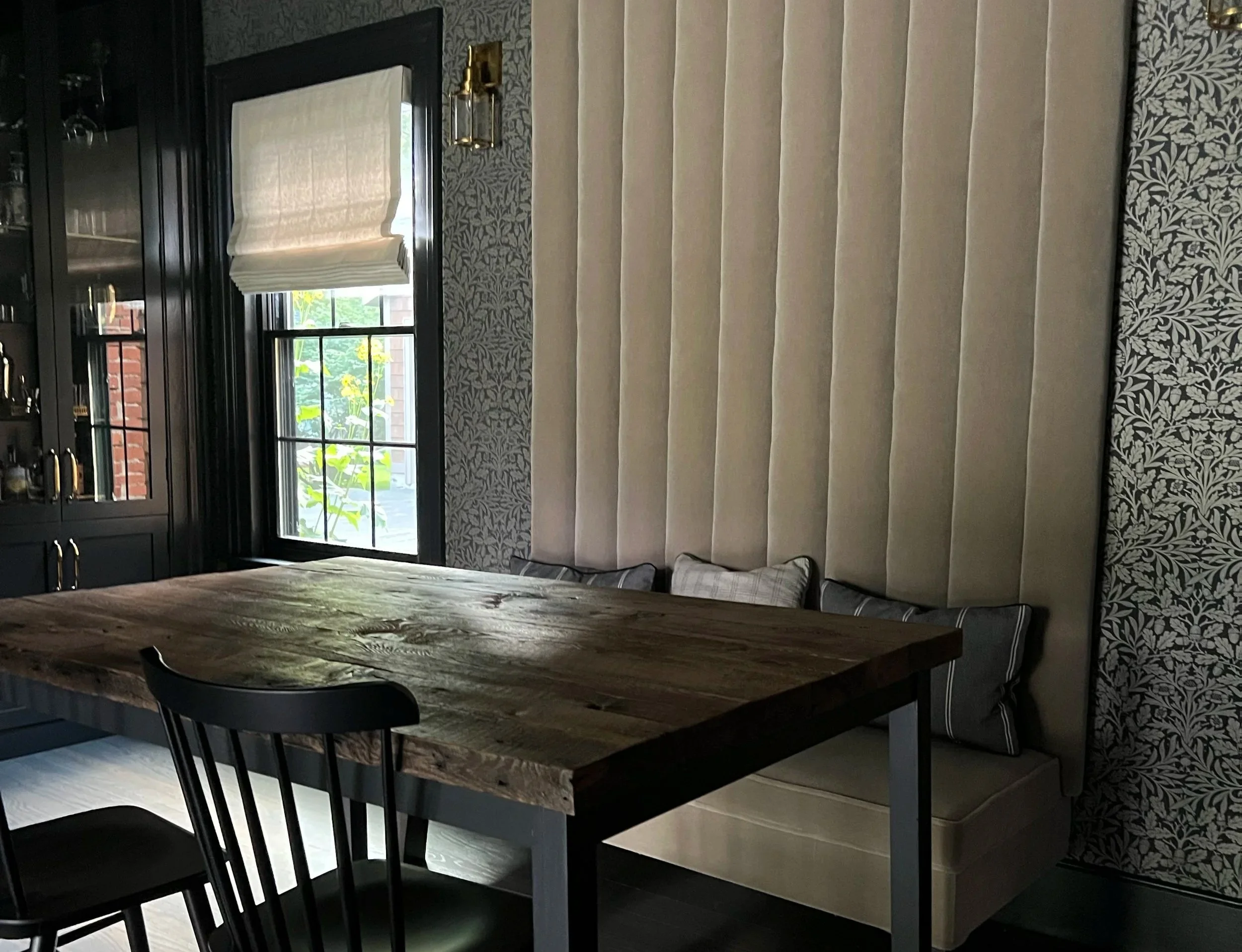
A replacement window selected to marry character and a client’s maintenance needs.
A last thought
Of everything in an old house, the windows are what the most hands have touched. They're opened and closed and painted and patched and swapped by everyone who's lived there before you, until the façade becomes a kind of record — every repair and every shortcut still legible to anyone who slows down to read it.
You're not just deciding whether to repair or replace. You're deciding what the next chapter of that record looks like, and whether the house comes out of your stewardship a little more honest than it went in. That's worth taking the time to get right. The good ones usually are.